Market Gardening
CSA Farming: How to Structure a Profitable Vegetable Subscription
Learn how to build a profitable CSA vegetable subscription with expert tips on pricing, crop planning, logistics, and customer retention strategies.

Published July 19, 2026 · 7 min read
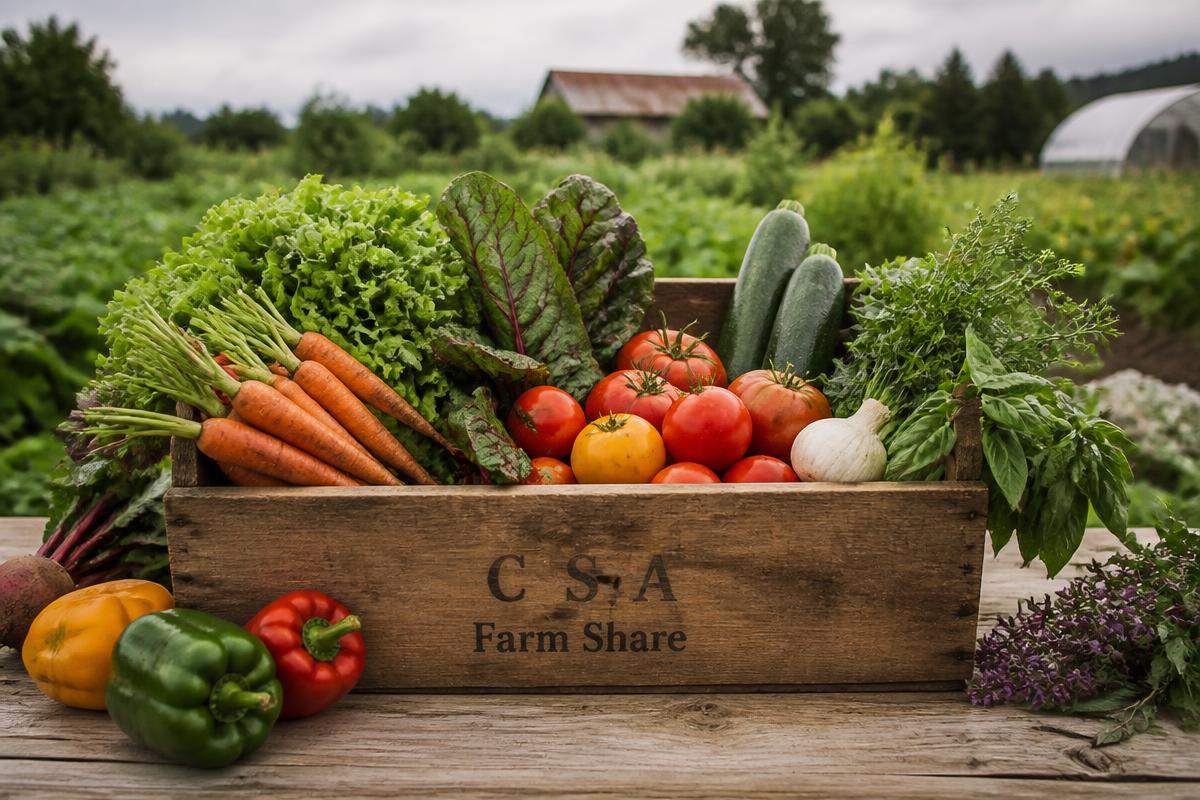
For the modern market gardener, CSA farming (Community Supported Agriculture) represents the holy grail of stability. By securing payment upfront from a dedicated group of "members," farmers can mitigate the financial risks of the shoulder seasons and build a loyal community that shares in both the bounty and the burdens of the land.
However, running a successful CSA requires more than just growing great tomatoes. It demands a sophisticated blend of logistics, member psychology, and rigorous succession planting. This guide outlines the blueprint for building a CSA that is both ecologically resilient and financially profitable.
1. Choosing Your CSA Model
There is no one-size-fits-all approach to CSA farming. Choosing the right model depends on your labor capacity and local market preferences.
- The Traditional Share: The classic "mystery box." Farmers choose the contents based on what is at peak ripeness. It offers the best efficiency for the farm but requires members who enjoy culinary experimentation.
- The "Market-Style" or Choice CSA: Members visit the farm or a drop-site and choose a set number of items (e.g., "pick any 8 items from the bins"). This increases member satisfaction and reduces kitchen waste.
- The Customizable/Software-Backed Model: Using platforms like Harvie or GrownBy, members can set preferences or swap items online. This is the highest labor-input for the farmer but results in much higher retention rates.
- Multi-Farm CSA: Partnering with neighbors to offer add-ons like eggs, bread, or fruit. This makes your CSA a "one-stop-shop" for the consumer.
2. Financial Benchmarks and Share Pricing
Underpricing is the most common mistake in CSA farming. To be profitable, your share price must cover seed, labor, packaging, insurance, and land overhead, plus a margin for reinvestment.
The Math of the Share
Most successful CSAs target a 20–25 week main season. A standard "Full Share" (feeding 2–4 people) typically ranges from $30 to $45 per week. A "Small Share" (feeding 1–2 people) ranges from $20 to $28 per week.
Example Calculation:
20 weeks x $35/week = $700 per share.
100 members x $700 = $70,000 gross revenue.
Pro Tip: Always calculate your "Value Added." If a member pays $35, the retail value of the vegetables in the box should be roughly $38–$40 to ensure they feel they are getting a "deal" for their loyalty.
3. Tactical Crop Planning for Consistent Boxes
In a CSA, "the gap" is your enemy. If you have three weeks in July with nothing but kale and radishes, your retention will plummet. Use a spreadsheet or software (like Tend or Small Farm Central) to back-schedule from your start date.
The "Anchor, Filler, Flair" Strategy
Every box should follow a formula to ensure it feels balanced:
- Anchors (The Essentials): Onions, carrots, potatoes, garlic. These provide bulk and are familiar to all cooks.
- Fillers (The Seasonal Bulk): Zucchini, tomatoes, lettuce mix, peppers.
- The Flair (The Surprise): Watermelon radishes, shishito peppers, fresh ginger, or a bunch of flowers.
Sample Share Contents: North American Northeast/Midwest
- June (Early): 1lb salad mix, 1 bunch radishes, 1 bunch bok choy, 1 quart strawberries, 1 bunch green garlic, 1lb spinach.
- August (Peak): 2lbs heirloom tomatoes, 1pt cherry tomatoes, 2 bell peppers, 3 cucumbers, 2 zucchini, 1 bunch basil, 1lb green beans, 1 head of garlic.
- October (Late): 1 butternut squash, 3lbs potatoes, 1 bunch kale, 2lbs carrots, 1 head cabbage, 1lb onions.
4. Streamlining Delivery and Logistics
Logistics can eat your profit margins if not handled efficiently. Decisions here dictate your Tuesday and Wednesday workflow.
- On-Farm Pickup: The most profitable. Minimal packaging and zero transport costs.
- Centralized Drop-Sites: Partner with local businesses (cafes, gyms, porches of loyal members). Aim for a minimum of 15 members per drop-site to justify the driving time.
- Home Delivery: Only sustainable if you charge a significant premium (typically $8–$12 per delivery) and use routing software like Route4Me to minimize fuel costs.
5. Professional Member Communication
People don't just buy vegetables when they join a CSA; they buy a connection to the farm. However, they also need clear instructions.
The Weekly Newsletter: This is non-negotiable. It should include:
- The Box List: Tell them exactly what is in the box.
- Storage Tips: "Keep the carrots in a sealed bag, but leave the tomatoes on the counter." This reduces food waste.
- A Recipe: Focus on the "hardest" item in the box (e.g., kohlrabi or celeriac).
- The Farm Story: A quick paragraph about the weather, a new tractor, or a blooming cover crop.
6. Risk Management: Facing the Elements
The "Shared Risk" aspect of the CSA is a core tenet, but it must be managed carefully. If a hailstorm wipes out your lettuce, you must communicate early and honestly.
- Crop Diversity: Grow at least 40 different varieties. If the tomatoes have a bad year due to blight, the peppers or squash might thrive.
- The "Rainy Day" Fund: Some farmers keep a small section of "surplus" crops not counted in the original CSA plan to act as a buffer for losses elsewhere.
- Member Agreement: Have a clear, signed document explaining that refunds are not given for weather-related crop failure. This protects your cash flow during disasters.
7. Regional Tips for CSA Success
- The South: Focus on "Heat-Shedding." Shift your CSA to a Fall/Winter/Spring schedule. A July CSA in Georgia is a recipe for scorched crops and burnt-out farmers.
- The Pacific Northwest: Invest heavily in high tunnels (caterpillar tunnels). The ability to provide dry, disease-free greens in a rainy June is a major competitive advantage.
- The Arid West: Prioritize mulching and drip irrigation to manage water costs. Highlight your "water-wise" growing practices to appeal to eco-conscious members.
8. Financial Benchmarks for Growth
To evaluate if your CSA farming operation is healthy, track these three metrics:
- Retention Rate: Aim for 70% or higher. It is five times cheaper to keep an old member than to find a new one.
- Labor per Box: Track your harvest/wash/pack time. If it takes more than 15 minutes of labor per box, look for automation (e.g., a barrel washer or a better pack-house layout).
- Revenue per Linear Bed Foot: Ensure your CSA crops are earning at least $4.00–$6.00 per bed foot per season.
Conclusion
CSA farming is a marathon, not a sprint. It requires a heart for community and a head for systems. By focusing on high-value crops, transparent communication, and ultra-efficient logistics, you can move away from the volatility of wholesale markets and build a farm that is supported by the very people it feeds. Start small—perhaps 20 to 30 members—perfect your systems, and grow alongside your community.
Member Retention and Communication
In the CSA model, the "cost of acquisition" for a new member is significantly higher than the cost of retaining an existing one. High turnover rates (often exceeding 40% in some regions) can destabilize a farm's financial planning. Successful farms treat communication not just as an information channel, but as a core component of the product itself.
To foster a sense of "radical transparency" and belonging, consider the following engagement strategies:
- The "Behind-the-Scenes" Weekly Newsletter: Don't just list what’s in the box. Share the stories of the week—the struggle with a specific pest, the joy of the first heirloom tomato, or a photo of the farm crew. This builds empathy and helps members understand the value of their investment when crops face challenges.
- Choice and Agency: Modern members value some level of customization. Implementing "Market Style" pickups or digital add-on stores allows members to swap items they dislike (e.g., swapping kale for extra carrots), which dramatically increases satisfaction ratings.
- Recipe Support and Education: A common reason for churn is "vegetable guilt"—the feeling of wasting food because the member didn't know how to cook a specific item like kohlrabi or garlic scapes. Provide 2-3 simple recipes per week specifically tailored to that week’s harvest.
Real-World Example: Greensleeves Organic Farm implemented a private Facebook group for members only. By encouraging members to post photos of their meals, they created a peer-to-peer support network that reduced "churn" by 15% in a single season, as veteran members taught newer ones how to preserve and cook surplus produce.
Pricing Models and Financial Benchmarks
Determining the right price for a CSA share is a delicate balance between farm viability and local market accessibility. Most farms move away from "matching grocery store prices" and instead move toward a "cost-plus" model that accounts for labor, seeds, infrastructure, and the "risk premium" associated with local agriculture.
When structuring your financials, consider these common industry benchmarks and distribution models:
- The Traditional Full-Pay Model: Members pay the entire seasonal fee upfront (typically $600–$900 for a 20-week season). This provides the farmer with essential zero-interest capital for spring seeds and equipment repairs.
- The Payment Plan Model: To increase accessibility, many farms offer a monthly installment plan. While this increases administrative overhead, it opens the CSA to lower-income demographics who cannot afford a large lump sum in February.
- Sliding Scale and Solidarity Shares: Some farms offer "Solidarity Shares" where wealthier members can opt to pay a higher price to subsidize discounted shares for neighbors in need. This aligns the farm’s mission with social justice and community resilience.
Financial Benchmarks to Track:
| Metric | Industry Average | Target Goal |
|---|---|---|
| Member Retention Rate | 50% - 60% | 75% + |
| Admin/Marketing Labor | 10% of revenue | < 7% of revenue |
| Value per Box (Wholesale) | $25 - $35 | Maintain 20% margin over costs |
Ultimately, a successful pricing strategy must be revisited annually. Factor in a 3-5% "cost-of-living" increase each year to ensure that while the members are being fed, the farmers are also earning a livable wage that allows for long-term land stewardship.
Key takeaways
- ◆Pricing must include labor and overhead, aiming for a 30-40% gross margin.
- ◆Succession planting is essential to provide variety and avoid 'harvest gaps'.
- ◆Efficient wash-pack station layouts can save hours of labor every week.
- ◆Customer retention is driven by flexibility, value-added recipes, and clear communication.
- ◆Partnering with other local producers for 'add-ons' increases share value without adding field work.
Frequently asked questions
What are the most profitable crops for a CSA?+
Focus on high-value, high-rotation crops like salad greens, carrots, and tomatoes. Avoid dedicating too much space to low-margin crops like corn or pumpkins unless you have significant acreage.
How do I determine share sizes?+
Standard shares usually feed a family of 4, while 'small' or 'half' shares feed 1-2 people. Offering two sizes is the best way to reach a broader demographic.
What happens if a member forgets to pick up their box?+
Have a clear policy in your member agreement. Many farms allow members to 'vacation' a box (get a double box later) or donate it to a local food bank if they can't make it.
How many weeks should a typical CSA season last?+
20 to 24 weeks is the standard for a summer CSA in temperate climates, but many farms are extending this with high tunnels to offer 4-week spring and fall cycles.
Keywords
- csa farming
- vegetable subscription model
- market garden profitability
- csa crop planning
- farm box logistics
- direct to consumer farming
Related reading
Market Gardening
Starting a Market Garden on a Tight Budget: A First-Year Plan That Can Actually Cash-Flow
Start a profitable market garden on a tight budget with first-year costs, hand tools, crop plans, sales channels, and cash-flow targets.
July 18, 2026 · 13 min read

Farm Business
The Farm Business Plan: What the First Five Years Actually Cost
An honest, working-farm walk-through of the financials most new farm business plans get wrong — startup costs, cash-flow gaps, breakeven timing and the numbers lenders actually want to see.
July 11, 2026 · 11 min read