Market Gardening
Cut Flower Farming on a Small Scale: Crop Selection, Harvest and Sales
How to start a small-scale cut flower enterprise: the five workhorse crops, succession planting, harvest stage, conditioning, sales channels and per-bed economics.

Published September 4, 2026 · 8 min read
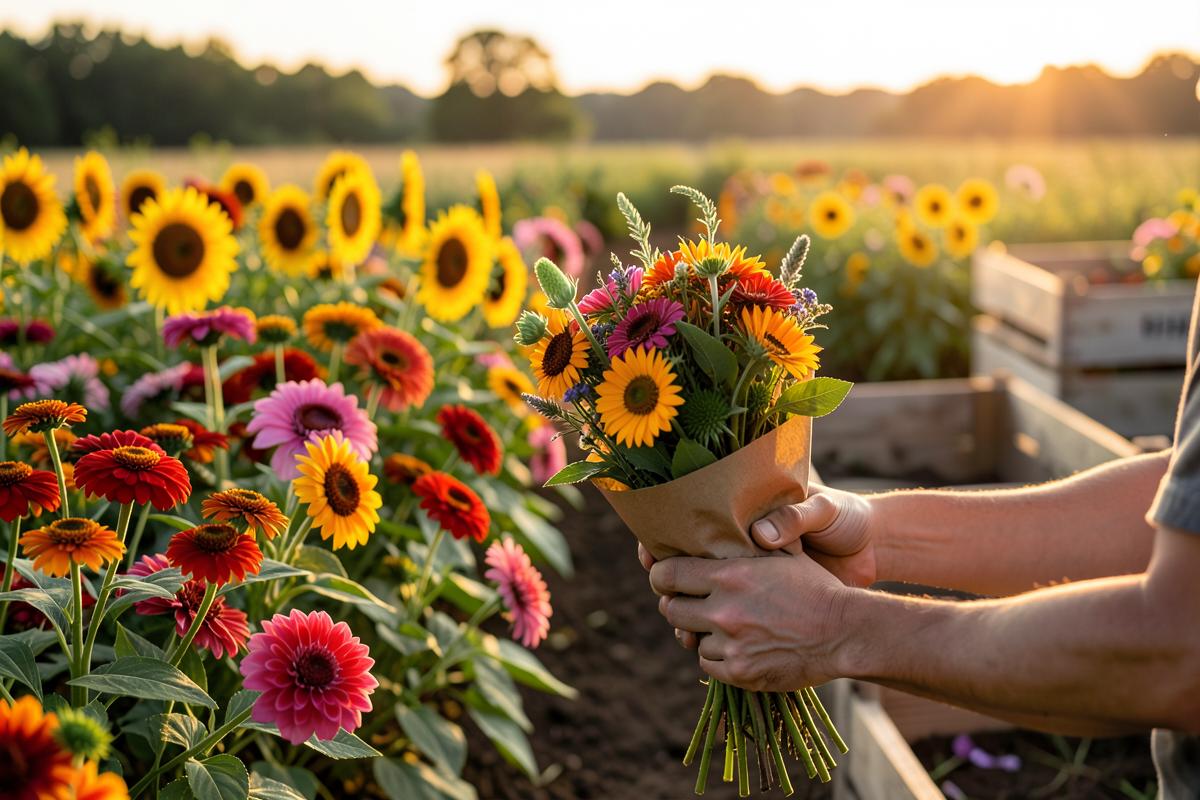
Cut flowers are the quiet high earner of small-scale agriculture. A single bed of zinnias returns more gross revenue per square foot than almost any vegetable, sunflowers sell themselves at a market stand, and a subscription bouquet program gives a farm recurring weekly income through the whole growing season. Unlike vegetables, flowers face almost no price comparison at the point of sale: nobody knows what a bouquet should cost, so a beautiful one commands whatever the local market will bear.
They are also perishable in a way vegetables are not, they demand succession planting discipline, and a crop cut at the wrong stage is worthless. Here is the system that makes flowers pay: what to grow, how to plan successions, when to cut, how to condition stems, and what the numbers actually look like.
Why Flowers Deserve a Place in the Plan
Revenue density is the headline. A 100-foot bed of zinnias or celosia, cut hard through its ten-week flush, produces 1,500 to 2,500 saleable stems. Bunched at ten stems for a twelve-dollar market bouquet, one bed carries 1,800 to 3,000 dollars of retail value. Few vegetables come close on the same footprint, and none do it while making the farm stand look like a festival.
Flowers also recruit customers. A bucket of mixed bouquets at the front of a market stall stops foot traffic in a way a stack of kale never will. Many vegetable growers report that adding flowers raised average transaction size even for customers who bought no flowers; the color simply drew them in. Finally, a flower block is a pollinator and beneficial-insect reservoir sitting next to your food crops, which pays a second dividend in pest control.
The Five Workhorse Crops
Start with flowers that are productive, forgiving and long-vased. Resist the catalog urge to grow forty varieties; five crops grown well beat twenty grown badly.
Zinnias are the foundation. Cut-and-come-again, heat-loving, heavy producers from early July to frost. Benary's Giant and Oklahoma series are the standards. Pinch at twelve inches for branching. Sunflowers, planted every two weeks from last frost to midsummer, give a guaranteed weekly crop; choose pollenless ProCut types so stems do not shed on customer's tables. Dahlias are the late-summer premium: tubers cost money up front but a single plant yields thirty to fifty stems and commands two to three dollars each at retail. Cosmos fill bouquets cheaply and bloom in seven weeks from seed. Celosia and amaranth provide the textural elements that make a mixed bouquet look professional rather than gathered.
Add one perennial anchor if space allows: peonies for the lucrative late-May wedding window, or yarrow, which dries as well as it sells fresh.
Succession Planting Without the Headache
The entire flower program rests on one question: what blooms in week X? Build the season backwards from frost. Zinnias bloom sixty to seventy-five days from seeding, so the first transplant goes out after frost and the final direct seeding happens seventy-five days before the first expected fall frost. Between those dates, seed a new block every two to three weeks, because a zinnia bed cuts hard for about eight weeks and then declines in both quality and stem length.
Sunflowers are simpler: plant a block every fourteen days, roughly six to eight successions per season. Cosmos and celosia take two or three successions. Dahlias are planted once and managed all season. A one-page spreadsheet with a row per crop and a column per week turns this from a memory exercise into a ten-minute January task, and the discipline it enforces is the difference between a farm with bouquets every week and a farm with a glorious three-week flush followed by nothing.
The Harvest Window That Makes or Breaks Vase Life
Most beginner flower failures happen at the cut. Every species has a harvest stage, and cutting even one day late can halve vase life.
Cut zinnias when the stem is stiff: grab the stem eight inches below the bloom and shake; if the head wobbles, wait. Cut sunflowers just as the first petals lift from the disk, not fully open. Dahlias are the exception: cut them nearly fully open because they barely open after cutting, and check the back of the bloom for browning petals. Cosmos go when petals are open but the center is still tight. Cut everything in the cool of early morning into clean buckets of fresh water, strip lower foliage in the field, and move stems to shade or a cooler within the hour.
Conditioning and Post-Harvest Handling
Conditioning is what separates a bouquet that lasts ten days from one that wilts in three. The standard routine: recut stems underwater or at a sharp angle, remove every leaf that would sit below the waterline, hydrate in cool clean water for four to twelve hours before arranging, and use a holding solution with biocide for anything that will wait overnight.
Cleanliness is non-negotiable. Bacteria in dirty buckets clog stems faster than any other single factor. Scrub buckets between uses with a bleach solution, change vase solution daily for stock you are holding, and keep the cooler at 38 to 40 degrees Fahrenheit for temperate species. Note that dahlias, zinnias and cosmos tolerate cooler storage well; celosia and amaranth prefer it a few degrees warmer. A used beverage cooler or a CoolBot-equipped room pays for itself in one season of reduced shrink.
Selling: Market Bouquets, Subscriptions and Florists
Three channels work at small scale. Farmers market bouquets are the simplest: mixed bunches of twenty to twenty-five stems priced at twelve to twenty dollars depending on local purchasing power, wrapped in kraft paper the evening before market. A bouquet subscription, the floral version of a CSA, sells ten to sixteen weekly bouquets paid in advance in spring; it is the best cash-flow structure in the flower world. Local florists buy wholesale at roughly half retail, but they buy weekly, in quantity, and they value consistency and unusual material they cannot get from the wholesale house.
Weddings are lucrative but dangerous for beginners. One disappointed bride costs more reputation than fifty market customers. Take event work only after two full seasons of consistent production, and only with a written contract and a backup supply plan.
The Economics Per Bed
A quarter-acre flower block, roughly forty 100-foot beds with paths, typically grosses 15,000 to 25,000 dollars at direct-market prices against 4,000 to 7,000 dollars of seed, tuber, bulb and supply cost. Labor dominates: cutting, stripping, bunching and selling flowers takes more hand-hours per dollar than most vegetables, which is why flowers reward a tight, standardized bunch recipe rather than bespoke arranging at the market table.
The first-year trap is growing too much diversity and selling too little of it. Grow five crops, cut them at the right stage, condition them properly, and show up every single week. Reliability builds the florist accounts and the subscription list that turn a flower plot into a flower enterprise.
Pest and Disease Pressure in the Flower Block
Flower blocks run cleaner than vegetable beds, but three problems account for nearly all losses. Japanese beetles skeletonize zinnia and dahlia foliage in midsummer across the eastern half of the country; the honest answer is a weekly hand-picking pass into soapy water in the evening, which keeps pressure below the cosmetic damage threshold without sprays that would also kill the beneficial insects your flower block is supposed to harbor. Powdery mildew arrives on zinnias in late summer regardless of what you do; resistant varieties, wide spacing for airflow, and the willingness to terminate a succession and move on beat any spray program. And deer will end an unprotected dahlia bed in a single September night.
The structural defense is the same one the vegetables get: tight rotation, clean plant debris removal at frost, and successions young enough that no planting ever sits in decline for long. A flower block cut hard and replanted on schedule is a healthy flower block. The beds that get diseased are almost always the tired ones that should have been turned under two weeks earlier.
Cutting itself is a pest management tool. A bed harvested thoroughly twice a week never carries the overripe blooms that breed botrytis and attract beetles. The most productive harvest rhythm and the cleanest crop are the same practice.
Stretching the Season at Both Ends
The highest-priced flowers of the year bloom when nobody else has them. Anemones and ranunculus, planted as corms in a caterpillar tunnel in autumn, flower in April and May when local florists are desperate for anything that did not come off a truck; a single early anemone stem wholesales for what a whole summer bouquet retails for. Sweet peas started indoors in late winter climb a tunnel trellis and bloom weeks before outdoor plantings.
At the back end, dahlias and celosia carry color right up to frost, and ornamental grasses, seed heads and dried material extend sales through the holiday season with zero season-long labor. A farm that sells something from April to November builds subscription customers and florist accounts that a June-to-September grower simply cannot hold.
Key takeaways
- ◆One 100-foot bed of zinnias returns 1,500-2,500 stems and up to $3,000 of retail bouquet value.
- ◆Grow five crops well: zinnias, sunflowers, dahlias, cosmos and celosia.
- ◆Cut at the correct stage per species; one day late can halve vase life.
- ◆Condition stems 4-12 hours in clean cool water and scrub buckets between uses.
- ◆A bouquet subscription is the best cash-flow structure in flower farming.
Frequently asked questions
What are the most profitable cut flowers for beginners?+
Zinnias, sunflowers and dahlias. Zinnias and pollenless sunflowers are nearly foolproof from seed; dahlias cost more up front in tubers but sell at two to three dollars per stem and produce for months.
How much land do I need to start a cut flower business?+
A quarter acre of beds can gross 15,000 to 25,000 dollars at direct-market prices. Many growers start profitably with just ten 100-foot beds alongside a vegetable operation.
When should I cut zinnias and sunflowers for the longest vase life?+
Cut zinnias when the stem is stiff (the wobble test) and sunflowers just as the first petals lift from the disk, always in the cool of early morning into clean water.
How do I sell cut flowers from a small farm?+
Start with farmers market bouquets, add a prepaid bouquet subscription in spring, and approach local florists once you can deliver consistent quality weekly. Leave wedding work until you have two seasons of reliable production.
Keywords
- cut flower farming
- best cut flowers to grow for market
- succession planting flowers
- flower bouquet subscription
- when to harvest zinnias
- selling flowers to florists
Related reading
Market Gardening
CSA Farming: How to Structure a Profitable Vegetable Subscription
Learn how to build a profitable CSA vegetable subscription with expert tips on pricing, crop planning, logistics, and customer retention strategies.
July 19, 2026 · 7 min read
Market Gardening
Market Gardening: The First-Year Mistakes That Cost the Most
The pattern of expensive mistakes new market gardeners make in year one — and the small planning decisions that separate a viable second season from a shut-down.
July 1, 2026 · 8 min read