Farm Business
Direct-Marketing Beef: The Half-Cow CSA Model That Sells Out Every Year
A working cattle producer's playbook for direct-marketing beef by the half — pricing, processor logistics, customer acquisition and the margin math that beats the auction barn by 3–5×.

Published July 16, 2026 · 13 min read
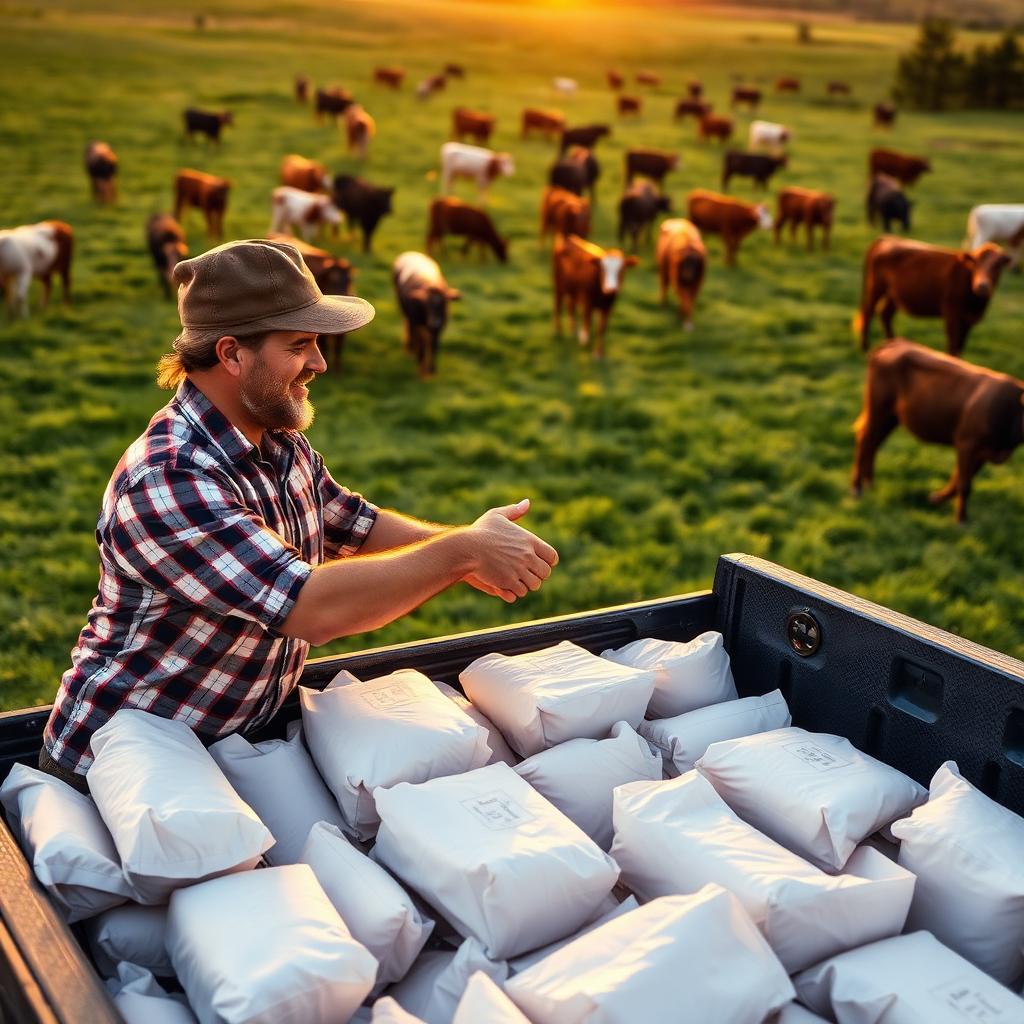
Selling a finished steer through the sale barn will net you around $1,400 in a strong market. Selling the same steer as two halves to direct customers will net you $2,800 to $4,200 — for the same animal, the same feed and roughly the same amount of your labor. The gap is not luck or premium pricing; it is a business model. This guide is that model, built from a working cow-calf and finishing operation selling 25 head per year direct to household customers.
Why the half-cow model wins
Direct-to-household beef can be sold three ways: by the cut (retail), by the quarter, or by the half or whole. Retail is a full-time job — you become a butcher-shop operator. Quarters sound customer-friendly but create a cut-sheet nightmare because two families are sharing one side of an animal. Halves are the sweet spot: one customer, one cut sheet, roughly 200 lb of packaged beef, a chest-freezer-sized commitment that fits a serious home cook's annual consumption.
A half also decouples you from retail-cut pricing. The customer buys an animal, not a package of ribeyes, so the price is quoted on hanging weight — the carcass weight after slaughter but before butchering — and you charge one flat rate per pound. Every cut, from filet mignon to soup bones, comes out at the same effective price. This is what makes the margins work.
The legal structure: custom-exempt vs USDA
In the U.S., you can sell beef by the half two ways: custom-exempt (the customer buys the live animal or a share of it before slaughter, so the meat is not "sold" — it is processed for the owner) or USDA-inspected (the meat itself is sold to the customer after slaughter and can be sold as individual cuts).
Custom-exempt is by far the most common structure for direct half-and-whole sales. The customer signs a bill of sale for a live half-animal before slaughter; the processor is a state-licensed custom facility; the meat is stamped "Not for Sale" and delivered directly to the customer. This is 100% legal for household consumption and is how the majority of farm-direct beef in the country moves.
USDA inspection is required only if you want to sell individual retail cuts or sell across state lines commercially. For a farm selling 5–50 head per year as halves and wholes, custom-exempt is the right structure — it avoids the USDA processor bottleneck entirely.
Pricing that actually pencils
The customer pays two bills: the farm bill (per pound of hanging weight, paid to you) and the processor bill (kill, cut, wrap, paid directly to the butcher). Making those two bills clear up front is the single most important customer-relations move you will make.
Working 2026 pricing on a 1,300 lb finished grass-fed steer, 62% dressing percentage → 806 lb hanging weight, split into two 403 lb halves:
- Farm price to customer: $6.75/lb hanging weight × 403 lb = $2,720 per half.
- Processor bill (kill + cut and wrap, paid by customer): $1.10–$1.40/lb hanging = $450–$565 per half.
- Take-home beef: roughly 65–70% of hanging weight = 260–280 lb of packaged beef.
- Customer effective price per pound of freezer beef: $11.30–$12.80/lb, all cuts included.
Farm-side revenue per steer: $5,440 (two halves × $2,720). Cost of production on a grass-finished animal at 22 months typically runs $1,900–$2,400 including calf, forage, minerals, animal-health and pro-rated pasture cost. Net per steer: $3,000–$3,500. The same steer at the sale barn nets $1,300–$1,500.
The processor bottleneck (and how to solve it)
Small custom processors are the constrained resource in the entire model. In most regions, they book 6–14 months out. This is not a scheduling annoyance — it is the single biggest reason producers fail to scale direct sales. Two rules:
- Book your entire year's slaughter dates in January. Not "when the animal is ready." Estimate finish dates from your calving records and lock the dates before you know exactly which animals will go.
- Build a relationship with two processors, not one. If your primary processor closes, sells or has an outbreak issue, a backup relationship is the difference between selling your beef and selling your beef at the auction barn.
Some producers now build small on-farm mobile-processing arrangements or invest in Modular Harvest System-style units. That is a real solution above ~40 head/year; below that, cultivating processor relationships is far cheaper.
Finding — and keeping — 30 customers a year
A 25-head operation selling exclusively as halves needs 50 half-customers per year. The good news: 60–75% of half-customers re-order every year once they have a working process. The recruitment challenge is finding the first cohort.
The channels that actually work, in rough order of effectiveness:
- Existing customer referrals — offer a $50 credit for each referred half sold. This is by far the highest-quality traffic and the cheapest customer acquisition cost.
- Local Facebook groups and neighborhood apps — "buy nothing," neighborhood, homeschool and CrossFit gym groups convert unusually well.
- A one-page website with a booking form — customers Google "grass fed beef half [town]." Rank for that phrase with a simple site and you will fill your order book.
- Farmers' market presence — even without selling retail cuts, a market booth with a sign-up sheet is a durable customer pipeline.
Managing the cut sheet conversation
The cut sheet — how the customer wants their half butchered — is where new direct-marketing farms melt down. First-time customers do not know what a cube steak is, do not know what to do with brisket, and will freeze when asked whether they want their roasts as chuck or arm.
The fix is a default cut sheet. Send every customer a pre-filled sheet with sensible defaults (1-inch steaks, 3-lb roasts, 1-lb ground beef packages, all bones and organs included) and a two-page plain-English guide explaining every choice. Ask them to sign the default sheet or edit it. Nine out of ten customers sign the default — and the tenth appreciates the option to edit.
Pickup day logistics
The customer picks up from the processor, not from the farm. That single decision saves you a day of your life every slaughter cycle. The processor calls customers when their beef is packaged (roughly 14 days after slaughter for dry-aged grass-fed). Customers pay the processor bill on pickup and pay you separately, typically by check or ACH on booking.
Freezer capacity is the customer's problem, but it is your marketing problem. A 5 cu ft chest freezer holds a half. Include that fact in every piece of sales copy — half your first-time buyers do not own a chest freezer and need to buy one before their beef is ready. Setting that expectation early prevents late-stage cancellations.
Scaling from 5 head to 40
At 5 head per year, you are running a very profitable side business — 10 customers, one processor, a spreadsheet. At 15 head, you need a booking form, a payment workflow and a second processor relationship. At 40 head, you are running a small business with a real website, an email list, structured cut-sheet defaults and a genuine forecasting problem — you must know a year ahead which animals finish which month.
The margin per animal barely changes across that range; what changes is systems. Almost every farm that fails to scale past 15 head fails on the same two constraints: processor access and customer-retention systems. Solve those two before adding more cattle.
The half-cow direct model is not a revenue trick — it is a different business than commodity beef. You are selling reliability, transparency and a working relationship, and you are being paid for the value the middle of the supply chain would otherwise capture. Done well, it is one of the few livestock enterprises where a small farm consistently beats a large one on margin per acre.
Key takeaways
- ◆The half-cow model turns a $1,400 sale-barn steer into a $3,000+ net per steer, without retail-cut complexity.
- ◆Custom-exempt processing (not USDA) is the correct legal structure for direct half-and-whole sales to households.
- ◆Price by hanging weight, not by cut — one flat rate per pound is what makes the margin math work.
- ◆Book the entire year's processing dates in January; processor access is the single hardest scaling constraint.
- ◆A default cut sheet plus a plain-English guide converts first-time buyers into 60–75% annual repeat customers.
Frequently asked questions
Do I need a USDA-inspected processor to sell beef direct?+
No — not for halves and wholes sold to household customers within your state. Custom-exempt processing (state-licensed, meat stamped 'Not for Sale' and delivered to the buyer of the live animal) is the standard structure. USDA inspection is only required if you want to sell individual retail cuts or ship across state lines commercially.
What is a fair hanging-weight price for grass-fed beef in 2026?+
In most regions, $6.25–$7.50 per pound hanging weight is the working range for grass-finished beef sold direct as halves. Grain-finished direct beef typically runs $5.75–$6.75. Prices below $6.00 rarely cover the full cost of a small operation once processor bookings, marketing time and pasture costs are honestly accounted.
How many pounds of packaged beef does a half actually yield?+
On a typical 1,300 lb finished steer with a 62% dressing percentage, one half yields 260–280 lb of packaged beef — roughly 65–70% of the hanging weight after bone-in cuts, trim and grinding losses. Boneless cut sheets yield less (around 55–60%); traditional bone-in sheets yield more.
How far in advance should I book processing dates?+
Book your full year of slaughter dates in January. Small custom processors are booked 6–14 months out in most regions, and 'call when ready' will cost you a full year of sales. Estimate finish dates from calving records and lock the calendar before knowing exactly which animals will fill each slot.
Keywords
- direct market beef half cow
- beef csa
- grass fed beef pricing
- farm direct beef marketing
- custom exempt beef sales
Related reading
Regenerative Farming
Silvopasture on Small Acreage: Trees, Livestock and Pasture in One System
How to integrate widely spaced trees with grazing animals on 5–40 acres — species selection, spacing, establishment costs, animal welfare gains and the ten-year economic case.
July 15, 2026 · 13 min read
Homesteading
Pasture-Raised Poultry: The Economics of a 200-Bird Flock
A transparent enterprise budget for a 200-bird pastured broiler operation — feed, infrastructure, labor, processing, sales and the actual take-home margin per bird.
July 13, 2026 · 12 min read

Farm Business
The Farm Business Plan: What the First Five Years Actually Cost
An honest, working-farm walk-through of the financials most new farm business plans get wrong — startup costs, cash-flow gaps, breakeven timing and the numbers lenders actually want to see.
July 11, 2026 · 11 min read