Regenerative Farming
Silvopasture on Small Acreage: Trees, Livestock and Pasture in One System
How to integrate widely spaced trees with grazing animals on 5–40 acres — species selection, spacing, establishment costs, animal welfare gains and the ten-year economic case.

Published July 15, 2026 · 13 min read
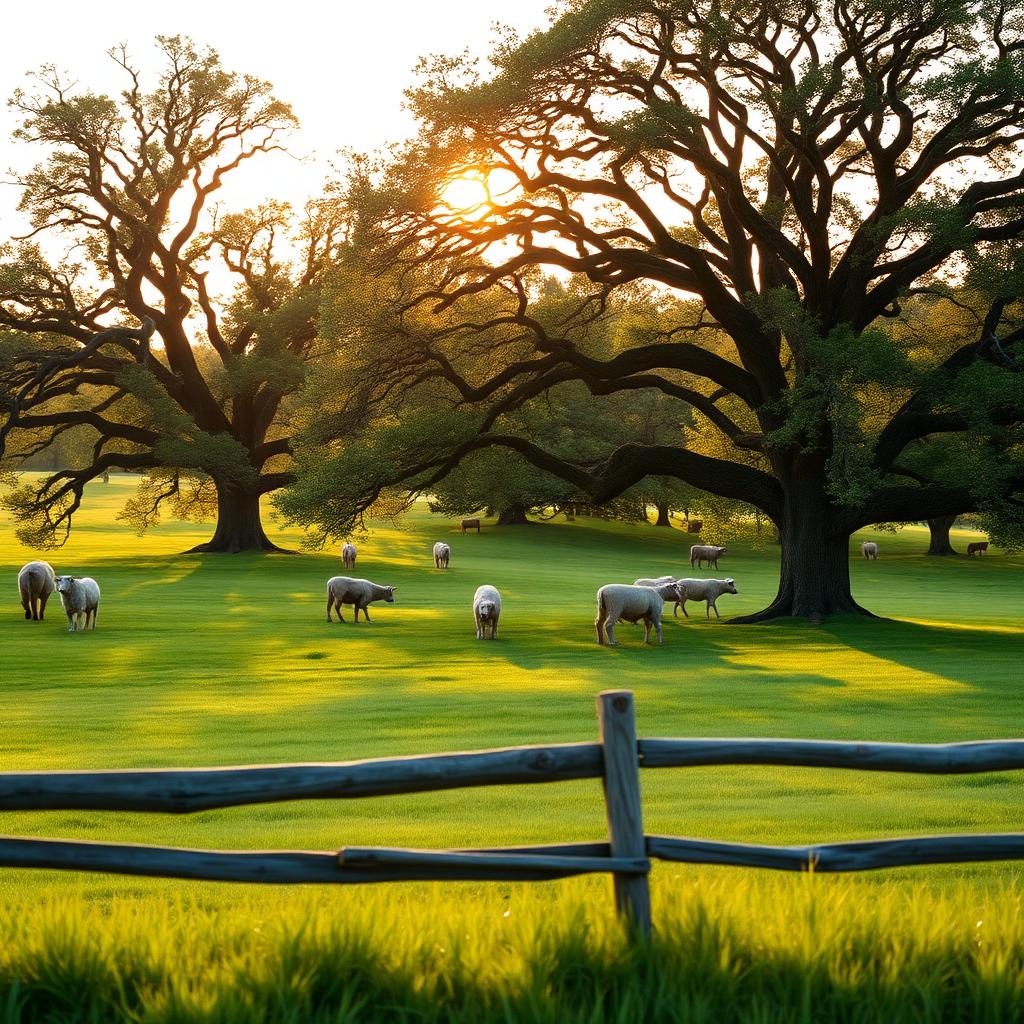
Silvopasture is the deliberate integration of trees, forage and grazing livestock on the same acre — managed as one system, not three that happen to overlap. Done well, it produces three revenue streams (timber, forage and livestock), lowers heat stress on animals, and rebuilds soil far faster than open pasture alone. Done poorly, it becomes a brushy woodlot with sad cows in it. This guide is about doing it well on 5 to 40 acres.
What silvopasture actually is
USDA defines silvopasture as the intentional combination of trees, forage plants and livestock as an integrated, intensively managed system. The key word is intentional. A wooded lot with a few cows wandering through is not silvopasture — it's overgrazed woods. In a real silvopastoral system, tree spacing is designed to allow 40–60% light transmission to the pasture layer, forage species are chosen to tolerate partial shade, and grazing is rotational rather than continuous.
You can build silvopasture two ways: thin an existing woodlot down to widely spaced trees, or plant trees into an established pasture. Thinning is faster and cheaper; planting into pasture is slower but gives you far more control over species and geometry.
Why it works on small acreage
Silvopasture used to be dismissed as a large-landscape practice, but the economics are actually strongest at small scale. On 5–40 acres, you rarely have the equipment or capital for a pure timber operation, and open pasture alone struggles to produce enough revenue per acre to justify the land. Silvopasture stacks enterprises so a single acre earns from animals now and timber or nuts later — with each enterprise improving the other's productivity.
Concrete gains reported across university extension trials on operations under 50 acres:
- 10–20% higher weight gains on cattle and sheep during heat-stressed summer months, due to shade access.
- Forage productivity within 90% of open pasture when trees are spaced correctly and shade-tolerant species (orchardgrass, tall fescue endophyte-free varieties, clover) are used.
- Soil organic matter gains of 0.4–0.6% over ten years — roughly double what rotational grazing alone achieves.
- A parallel timber or nut asset that appreciates on the same acres already earning livestock income.
Designing the system
Three design decisions drive everything else: tree spacing, row orientation and fencing. Skip any of them and the system either shades out the pasture or fails to protect the trees.
Spacing. A working rule of thumb is 40–60 trees per acre at maturity, arranged in single or double rows with 30–50 ft between rows and 15–25 ft between trees within the row. This gives you 40–60% light transmission at canopy closure — enough for cool-season forage grasses to persist.
Orientation. Run rows north–south in most of North America so shade tracks across the pasture rather than sitting on one strip all day. In hotter southern climates, east–west rows can be preferable to give animals reliable midday shade.
Fencing. Every young tree needs individual protection until it is above browse height (roughly 6 ft for cattle, 4 ft for sheep). Two-inch woven wire tree tubes or a 5-ft plastic mesh sleeve staked with two rebar posts is the standard. Budget $8–$15 per tree in protection alone — this is where most silvopasture attempts fail, because the trees get browsed to death in year two.
Choosing trees that pay
The tree layer needs to earn its keep. On small acreage, high-value hardwoods and food-producing species beat pulpwood species every time. The four workhorse categories:
- Nitrogen-fixing legumes — black locust, honey locust (thornless cultivars), and mimosa. Fast-growing, coppice well for firewood and fence posts, and improve pasture nitrogen through leaf drop.
- High-value hardwoods — northern red oak, black cherry, black walnut (with juglone-tolerant forages). Long rotation (40–80 years) but very high per-tree value at harvest.
- Nut trees — chestnut, hazelnut, hickory. Produce annual cash crop starting in years 5–10, in addition to eventual timber value.
- Fruit trees — apple, pear, persimmon. Produce livestock feed (windfalls) plus market fruit. Especially strong with sheep and hogs.
Diversify. A silvopasture with 3–4 species across those categories spreads risk and gives you a staggered income stream — nuts in year 8, firewood in year 12, market fruit throughout, sawtimber in year 40+.
Establishment costs, year by year
Realistic per-acre establishment costs on 10 acres, planting into existing pasture at 50 trees/acre:
- Year 0 — Site prep, planting stock, tree tubes, planting labor: $900–$1,400/acre.
- Years 1–3 — Mowing between rows, tube maintenance, replacement seedlings (~10% mortality): $150–$250/acre/year.
- Years 4–7 — Formative pruning of high-value hardwoods and nut trees, tube removal: $80–$150/acre/year.
Total 7-year establishment investment: roughly $1,700–$2,500 per acre. USDA-NRCS EQIP and CSP cost-share programs frequently cover 40–75% of establishment costs for qualifying silvopasture practices — do not start planting without checking with your local NRCS office first.
Grazing management inside the trees
The single most common mistake is turning animals in too soon. Sheep and goats can graze silvopasture in year 2 if tubes are secure; cattle should be excluded until year 3–4, when trees are above browse height and root systems are established. During that window, hay or standing forage between rows still produces revenue — you simply harvest it mechanically rather than graze it.
Once animals are integrated, run a rotational system with 24–72 hour paddocks and rest intervals of 25–45 days. Sheep pair particularly well with silvopasture because they preferentially browse woody weeds (bramble, multiflora rose) that would otherwise crowd young trees.
The ten-year economic case
Compared to open pasture running a cow-calf pair on the same acre, mature silvopasture typically produces:
- 90–100% of the livestock revenue of open pasture (thanks to shade-driven weight gains offsetting slight forage reductions).
- An additional $200–$800/acre/year in nut, fruit or firewood revenue by years 8–12.
- A standing timber asset appreciating at 5–8% per year with no additional inputs.
On 20 acres, that translates to an incremental $4,000–$16,000/year in tree-derived revenue by year 10, plus a timber asset typically worth $60,000–$180,000 by year 30 that costs nothing to hold.
Five mistakes that stall silvopasture
- Under-protecting trees. Skipping tubes or using cheap mesh loses 40–70% of your seedlings to browse in year two.
- Wrong spacing. Trees planted too close shade out pasture by year eight and the forage layer dies.
- Wrong species. Pulpwood pines or fast-growing but low-value trees rarely justify the establishment cost.
- Turning cattle in too early. One season of unprotected cattle access can kill five years of tree investment.
- Not applying for cost-share. NRCS EQIP payments often cover more than half of establishment costs and are widely underused.
Silvopasture rewards patience with something rare in agriculture: an acre that earns more, resists drought better, and appreciates as an asset — all at the same time. It is one of the few practices where the tenth year is genuinely more profitable than the first.
Key takeaways
- ◆Design for 40–60 trees per acre and 40–60% light transmission — the pasture layer depends on it.
- ◆Individual tree protection is non-negotiable; skimping here is the top reason silvopasture fails.
- ◆Diversify tree species across nitrogen-fixers, high-value hardwoods, nuts and fruit for staggered revenue.
- ◆Expect $1,700–$2,500 per acre establishment cost, with NRCS cost-share frequently covering half.
- ◆By year 10, silvopasture typically matches open-pasture livestock revenue plus adds $200–$800/acre/year from trees.
Frequently asked questions
How many acres do I need to start silvopasture?+
Five acres is enough to see meaningful returns from a single-species planting; ten to twenty acres allows a diversified mix of nut, timber and legume trees with real cash flow by year 8. Below five acres, you are usually better off with a dedicated orchard or intensive rotational grazing.
Can I convert existing woods to silvopasture?+
Yes — this is typically the fastest and cheapest route. Thin the stand to 40–60 residual trees per acre of high-value species, remove undesirable understory, and seed shade-tolerant forages. Establishment costs are 30–50% lower than planting into open pasture, but you have less control over species mix.
Which animals work best in silvopasture?+
Sheep are the easiest starting point — they tolerate shade, browse woody weeds, and don't damage mature trees. Cattle work well once trees are above browse height. Pigs are excellent under nut trees (mast finishing) but need robust fencing. Goats are hardest — they will girdle almost any tree without permanent protection.
Is silvopasture eligible for NRCS cost-share?+
Yes. Silvopasture is USDA-NRCS conservation practice code 381. EQIP and CSP frequently cover 40–75% of establishment costs (site prep, planting stock, tree protection). Contact your local NRCS office before planting — cost-share is not retroactive.
Keywords
- silvopasture small farm
- silvopasture design
- trees and livestock
- agroforestry grazing
- silvopasture economics
Related reading
Homesteading
Pasture-Raised Poultry: The Economics of a 200-Bird Flock
A transparent enterprise budget for a 200-bird pastured broiler operation — feed, infrastructure, labor, processing, sales and the actual take-home margin per bird.
July 13, 2026 · 12 min read
Regenerative Farming
Regenerative Agriculture vs. Organic: What Actually Separates Them
Regenerative and organic overlap on the surface but diverge on what they measure, reward and forbid. A working agronomist's honest side-by-side comparison for farmers deciding which path fits.
July 10, 2026 · 11 min read
Soil Health
Building Healthy Soil: A Practical, Working-Farm Guide
How real farms build living, productive soil — a field-tested guide to soil biology, organic matter, cover crops and testing you can actually use this season.
May 14, 2026 · 12 min read