Homesteading
Pasture-Raised Poultry: The Economics of a 200-Bird Flock
A transparent enterprise budget for a 200-bird pastured broiler operation — feed, infrastructure, labor, processing, sales and the actual take-home margin per bird.

Published July 13, 2026 · 12 min read
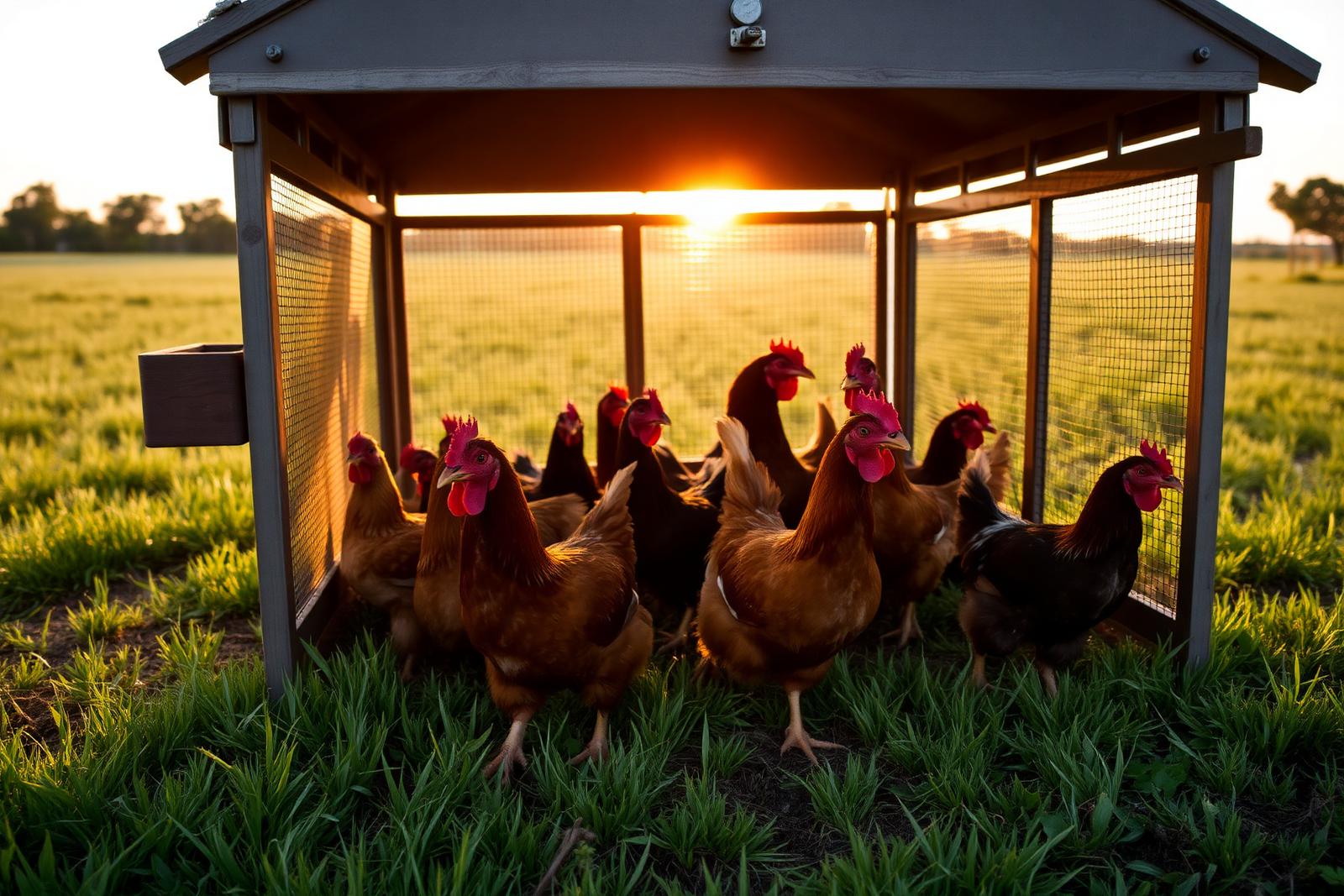
A pastured poultry enterprise is one of the fastest, most transparent ways to test whether small-scale farming can actually pay you back. Broilers finish in 8 weeks. Capital costs are modest. And you get a real answer — dollars in the bank — inside a single season. This is a full enterprise budget for a 200-bird batch, drawn from my own numbers and those of three operations I have advised.
Why 200 birds is the sweet spot
Below 100 birds, fixed costs (a mobile coop, a feed bin, a processing setup) don't spread out enough to make the labor worth it. Above 500 birds, most states require some form of licensed processing that a homestead scale doesn't justify. A 200-bird batch — run 3–4 times a season for 600–800 finished birds a year — sits inside the federal Producer/Grower Exemption (1,000 birds/year, on-farm processing, direct sales only) in the United States, which is the single most important regulatory line for a small operator.
Two hundred birds also fits a standard 10×12 ft mobile coop moved once daily on a rotation of roughly a half-acre over eight weeks. That's a scale one person can operate in 30–45 minutes a day.
Infrastructure: what you actually need
The one-time capital list for a serious 200-bird setup:
- Mobile coop — build for $600–$1,200 or buy for $2,500–$4,000. A field pen (Salatin-style) works; a Suscovich-style skid-tractor works better in rougher terrain.
- Feeders and bell waterers — plan for 1 feeder per 25 birds and 1 waterer per 40 birds. Budget $300–$500.
- Brooder — an insulated 4×8 ft box with radiant heat plates. $250 in materials.
- Processing setup — plucker, scalder, kill cones, chill tank. Budget $2,500–$4,000 for a functional homestead-scale rig, or pay $3.50–$6/bird at a poultry processor.
All-in one-time capital ranges from $3,500 (DIY, custom processing) to $9,000 (bought coop, own processing setup). Amortize this over five seasons of 600 birds and you're looking at $1.00–$3.00 per bird in depreciation.
Feed: the number that dominates everything
Feed is 60–70% of the cost of every pastured broiler in America. A Cornish Cross will eat about 15 lb of feed over its eight-week life to reach a 4.5–5 lb dressed weight. At $0.35–$0.55/lb for a quality non-GMO or soy-free ration in 2026 markets, that is $5.25 to $8.25 per bird in feed alone.
The three levers that move the number:
- Feed conversion ratio (FCR). Good genetics + clean water + shade + daily moves keeps FCR at 2.3–2.5. Poor management pushes FCR to 3.0+, adding a full dollar of feed per bird.
- Bulk buying. A ton at a time saves 15–25% over 50-lb bags.
- Slower-growing genetics. Freedom Rangers eat 10–15% more total feed but tolerate more pasture and often finish with a higher-value carcass.
Labor: the honest hours per week
A tightly run 200-bird batch takes about 4–5 hours of labor per week outside of brood and processing weeks:
- Daily coop move + water + feed check: 25–35 minutes.
- Weekly water line clean, feeder refill from bulk bin: 60 minutes.
- Brooder week 1–3: add 15 minutes per day.
- Processing day: 8–14 hours for a two-person crew.
Total labor across the eight-week cycle plus processing: roughly 55–75 hours. At a modest $18/hour opportunity cost, that is $1,000–$1,350 in labor value for the batch — a number to respect but not to charge on your P&L until the operation can support paying yourself.
Processing and the regulation question
The federal 1,000-bird Producer/Grower Exemption allows on-farm processing of birds you raised, sold directly to consumers, restaurants (in some states) and retail (in others), without USDA inspection — but state rules vary widely. Some states allow up to 20,000 birds under a Special Permit; others require inspection above 250. Call your state department of agriculture before your first batch, not after.
If custom processing costs $4.50/bird and you're doing 600 birds a year, that's $2,700 you could keep by doing it yourself — which pays back a $3,500 processing rig in a season and a half.
Sales: where the margin lives
Retail pricing in 2026 for pasture-raised, on-farm-processed whole birds is $6.50–$9.50/lb depending on region and channel. A 4.5 lb bird retails at $29–$43. If you sell at $8/lb through a farmers market or on-farm pickup, that's $36 gross per bird.
Channels ranked by margin (highest first):
- Direct farm pickup and CSA — no distribution cost, best price.
- Farmers markets — good price, ~$40 in market fees + 4 hours labor.
- Restaurants — reliable volume, but $2–3/lb lower than retail.
- Wholesale/retail store — lowest price, only worth it above 600 birds/year.
The full P&L for a 200-bird batch
A realistic, honest budget for a well-run 200-bird batch, all figures per batch:
- Revenue: 195 finished birds × 4.5 lb × $8/lb = $7,020
- Chicks (200 @ $2.75): $550
- Feed (3,000 lb @ $0.45): $1,350
- Brooder heat, bedding, supplements: $140
- Processing (DIY: bags, ice, blades, propane): $260
- Marketing, market fees, fuel: $250
- Depreciation on capital (per batch of 4/yr): $500
- Total costs: $3,050
- Gross margin: $3,970 / batch — roughly $20/bird before labor.
Run three batches a season and you're looking at $10,000–$12,000 in gross margin — for what most operators clock as 200–225 hours of work. That is $45–$55 an hour, at a scale a single person can run alongside another job.
When to scale — and when not to
The math above holds up to about 1,000 birds a year — the ceiling of the federal exemption. Above that, you enter licensed-processing territory: another $60,000–$150,000 in facility investment, or per-bird processing that eats $4–6 of your margin. Most operators who cross that line do so only because they've built enough direct-market demand to guarantee sales.
If a 200-bird batch pays as promised, do not immediately double it. Do it three more times, refine your processing speed, lock in bulk feed pricing, and prove your market will absorb the volume at the same price. Pastured poultry is one of the few enterprises where discipline, not ambition, is the shortest path to real income.
Key takeaways
- ◆200 birds fits inside the federal exemption and is the sweet spot for a solo operator.
- ◆Feed is 60–70% of the cost of every bird — feed conversion and bulk buying matter more than any other lever.
- ◆A well-run 200-bird batch produces roughly $20 per bird in gross margin before labor.
- ◆Direct farm pickup and CSA channels keep the most margin per bird.
- ◆Scale only after you have proven three consistent batches and can lock in bulk feed pricing.
Frequently asked questions
What is the federal 1,000-bird poultry exemption?+
The USDA Producer/Grower Exemption allows a farmer who raises fewer than 1,000 birds a year to slaughter and sell them on-farm without USDA inspection, as long as the birds are sold directly to end consumers or (in some states) restaurants and retail. State rules vary — always confirm with your state department of agriculture.
Cornish Cross or Freedom Rangers?+
Cornish Cross has the best feed conversion (2.3–2.5) and finishes in 7–8 weeks — best for pure economics. Freedom Rangers or Red Rangers take 10–12 weeks, eat 10–15% more, but tolerate pasture better and produce a richer carcass many customers pay more for. Try both in your first two seasons.
How much land does 200 birds need?+
Roughly half an acre over an eight-week cycle, moved daily. The birds should never spend more than one day on the same patch. Pasture recovers in 30–45 days depending on rainfall — so a full-season operation of 600 birds needs 1.5–2 acres of pasture rotation.
Is DIY processing worth it?+
Above about 300 birds a year, yes. Custom processing at $4–6 per bird eats too much margin at scale, and a $3,000–$4,000 DIY setup pays back inside two seasons. Below 300 birds a year, custom processing is usually the smarter choice.
Keywords
- pasture raised chicken economics
- pastured poultry enterprise budget
- cost to raise a broiler
- mobile chicken coop
- small farm chicken business
Related reading

Farm Business
The Farm Business Plan: What the First Five Years Actually Cost
An honest, working-farm walk-through of the financials most new farm business plans get wrong — startup costs, cash-flow gaps, breakeven timing and the numbers lenders actually want to see.
July 11, 2026 · 11 min read
Homesteading
Starting a Backyard Homestead: The Realistic First Year
A grounded, non-romantic guide to your first year of homesteading — what actually works on a quarter-acre, in what order, and where new homesteaders most often burn out.
July 5, 2026 · 9 min read
Market Gardening
Market Gardening: The First-Year Mistakes That Cost the Most
The pattern of expensive mistakes new market gardeners make in year one — and the small planning decisions that separate a viable second season from a shut-down.
July 1, 2026 · 8 min read