Soil Health
Building Healthy Soil: A Practical, Working-Farm Guide
How real farms build living, productive soil — a field-tested guide to soil biology, organic matter, cover crops and testing you can actually use this season.

Published May 14, 2026 · Updated July 1, 2026 · 12 min read
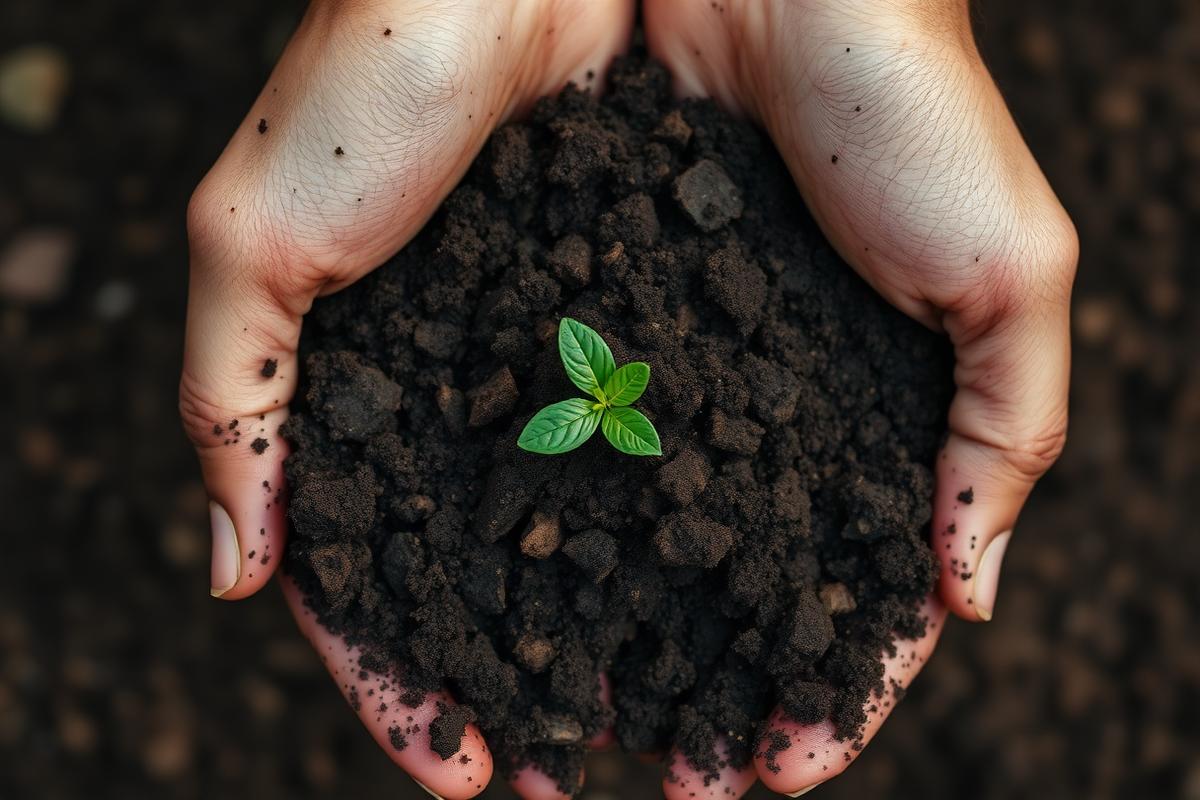
Healthy soil is the single highest-return investment on any farm or garden. Not fertilizer, not seed genetics, not the newest tractor implement — soil. Every operation I have advised in fourteen years of agronomy work that got serious about soil biology saw yields improve, input costs fall, and drought resilience rise within three growing seasons. This guide walks through what that actually looks like on the ground.
Why soil health is the whole game
Soil is not an inert substrate that holds plants upright. A single teaspoon of healthy topsoil contains more microorganisms than there are people on Earth — bacteria, fungi, protozoa, nematodes and arthropods working in tight symbiosis with plant roots. When that biology is intact, plants get water, nitrogen, phosphorus and dozens of trace minerals delivered to their root zone almost on demand. When it isn't, you have to buy those inputs in a bag and hope for rain.
The USDA-NRCS summarizes soil health around four principles: minimize disturbance, keep the soil covered, maximize living roots year-round, and maximize biodiversity. Every practice in this guide traces back to one of those four.
Test before you touch it
Before you spend a dollar on amendments, get a real soil test. Not the pH-and-NPK kit from the hardware store — a full test from a reputable lab like Logan Labs, Ward Laboratories, or your state extension service. A good baseline test should tell you:
- pH and buffer pH
- Cation exchange capacity (CEC) and base saturation
- Organic matter percentage
- Available macronutrients (N, P, K) and secondary (Ca, Mg, S)
- Micronutrients (Zn, Mn, Fe, Cu, B)
If you're serious, add a Haney test or a PLFA microbial test on at least one representative sample. The Haney test measures the fraction of soil nutrients that are actually plant-available through biological activity — a very different picture than the "total" pool.
Organic matter is the lever
If I had to name a single number that predicts long-term farm resilience, it would be soil organic matter (SOM). Every 1% increase in SOM raises water-holding capacity by roughly 20,000 gallons per acre and stores hundreds of pounds of nitrogen. In practical terms, going from 2% to 4% SOM can mean the difference between losing a corn crop in a two-week drought and losing only 15% of yield.
The three practical drivers of SOM are:
- Continuous living roots. Roots exude sugars that feed the microbes that build stable soil carbon.
- Diverse residue returns. Cover crops, crop stubble and — where budgets allow — quality compost.
- Reduced disturbance. Every tillage pass oxidizes carbon and releases it as CO₂.
Feeding the biology
Once you stop killing it, soil biology recovers surprisingly fast. To accelerate the process:
- Add carbon in usable forms. Well-finished compost at 3–5 tons/acre applied once, not repeatedly, seeds a diverse microbial community.
- Avoid broad-spectrum fungicides on the soil. Mycorrhizal fungi are the single most valuable microbial partner for most crops.
- Keep something green growing whenever possible. Bare ground is a metabolic desert.
Cover crops that pay their rent
A cover crop earns its keep when it accomplishes at least two of: adding organic matter, fixing nitrogen, suppressing weeds, breaking compaction, feeding pollinators, or providing forage. Some workhorses:
- Cereal rye — winter-hardy, weed-suppressive, produces enormous biomass.
- Crimson clover — fixes 70–150 lb N/acre, easy to terminate.
- Tillage radish — breaks compaction, scavenges nitrogen.
- Buckwheat — 30-day summer cover, mines phosphorus, attracts beneficials.
Mixes almost always outperform single species. A five-way mix of a grass, two legumes, a brassica and a broadleaf gives you the ecological insurance of biodiversity.
Rethinking tillage
You do not have to go full no-till overnight — most operations can't. But every pass you can eliminate returns yield. Practical steps:
- Move from moldboard plow to chisel or vertical tillage.
- Use a roller-crimper to terminate cover crops instead of disking them in.
- Reserve tillage for the specific rotations where it genuinely earns its cost.
A realistic three-year plan
If you take nothing else from this article, take this three-year on-ramp we've run with dozens of operations:
Year 1. Full soil test on every field. Establish a cover-crop mix on the two worst-performing blocks. Cut one tillage pass. Stop applying anything you can't justify from a test.
Year 2. Expand covers to every fallow window. Introduce a diverse rotation on at least half the acreage. Retest and compare organic matter.
Year 3. Evaluate. Most operations at this point are seeing 0.3–0.6% SOM gains, 10–20% reductions in synthetic N, and measurably better water infiltration. The compounding starts here.
Soil health is a decade-long project, not a season-long product. But every honest step compounds — and unlike most inputs, it belongs to you the moment you stop paying for it.
Key takeaways
- ◆Soil is a living ecosystem — treat it like one and yields follow.
- ◆A real lab soil test is the cheapest, highest-leverage step you can take.
- ◆Every 1% of organic matter is worth ~20,000 gallons/acre of water-holding capacity.
- ◆Cover crops, diverse rotations and reduced tillage compound over 3–5 years.
- ◆Expect meaningful ROI in year three, not year one.
Frequently asked questions
How long does it take to build healthy soil?+
Measurable improvements in structure, water infiltration and microbial activity typically appear within 12–24 months of consistent practices. Meaningful gains in soil organic matter (0.5% or more) generally take 3–5 years. The compounding accelerates over time.
What is the fastest way to raise soil organic matter?+
The fastest sustainable path is continuous living roots (cover crops in every fallow window) combined with reduced tillage. Heavy compost applications can spike organic matter numerically but often plateau unless the biology and root systems are also restored.
Can I build healthy soil in a raised bed or backyard garden?+
Absolutely — the same principles apply. Keep the soil covered with mulch or living plants, minimize turning it over, add a diversity of compost and organic materials, and avoid broad-spectrum fungicides. Small gardens often show results faster than field-scale.
Do I still need fertilizer if I focus on soil health?+
Usually less, sometimes far less, but rarely none in year one. Most operations reduce synthetic N by 20–40% within three years of serious soil-health work, and cut phosphorus and potassium significantly once mycorrhizal networks are re-established.
Keywords
- how to build healthy soil
- soil organic matter
- improve garden soil
- soil biology
- cover crops for soil
Related reading
Market Gardening
Market Gardening: The First-Year Mistakes That Cost the Most
The pattern of expensive mistakes new market gardeners make in year one — and the small planning decisions that separate a viable second season from a shut-down.
July 1, 2026 · 8 min read
AgTech & Precision Farming
Smart Irrigation for Small Farms: Systems That Pay Back
Drip, sensors, and scheduling that actually work on 1–20 acres. Real system designs, costs, and the metrics that decide whether the investment pays for itself.
June 18, 2026 · 9 min read
Regenerative Farming
Cover Crop Rotation Planning: A Season-by-Season Playbook
Design a cover-crop rotation that actually fits your cash crops, climate and equipment. A working agronomist's playbook with species mixes, seeding rates and termination timing.
June 2, 2026 · 10 min read