Regenerative Farming
Cover Crop Rotation Planning: A Season-by-Season Playbook
Design a cover-crop rotation that actually fits your cash crops, climate and equipment. A working agronomist's playbook with species mixes, seeding rates and termination timing.

Published June 2, 2026 · 10 min read
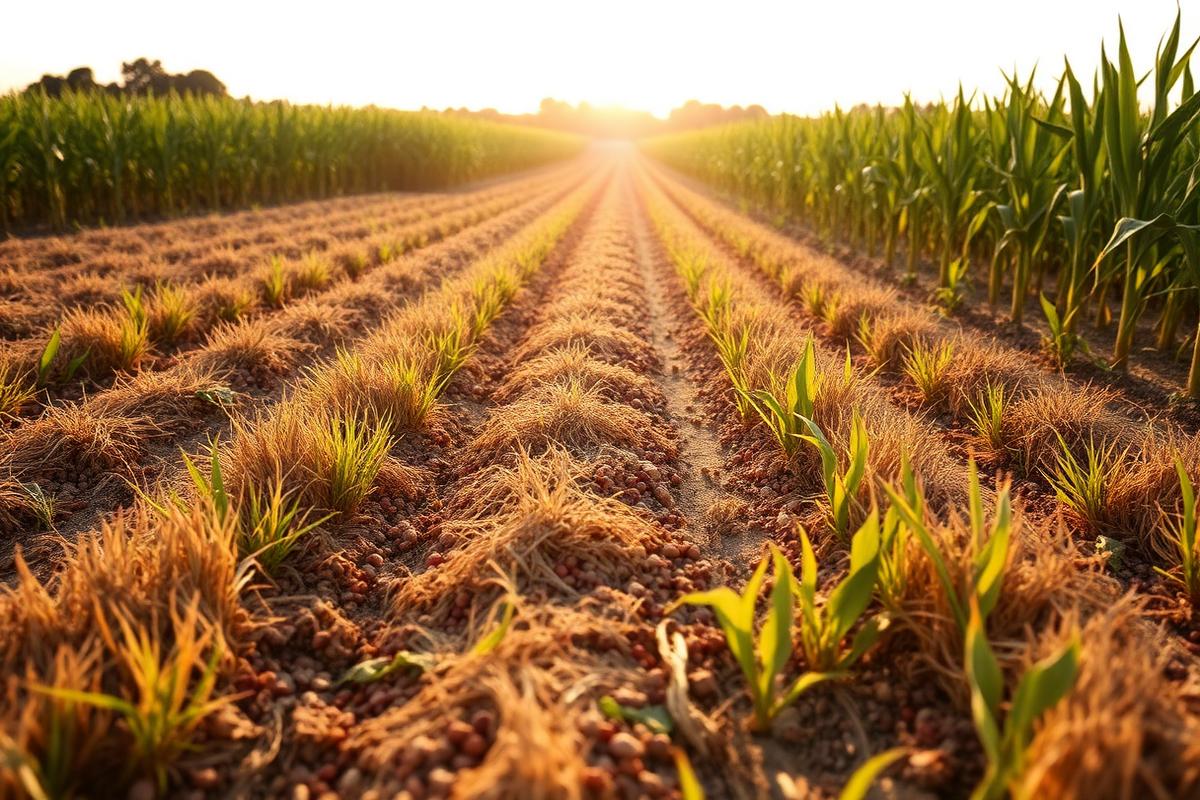
Cover crops fail for the same three reasons almost every time: wrong species for the window, seeded too late, and terminated too early or too late. Rotation planning is the discipline of eliminating those three failure modes before you buy a single pound of seed.
Start with the rotation's job
Before you pick species, write down what the cover crop needs to do in that specific window. There are usually only one or two real jobs — nitrogen, weed suppression, compaction relief, biomass, forage, or beneficial habitat. A cover crop trying to do five jobs generally does none of them well.
Choosing species that fit
- Need nitrogen before a heavy feeder? Crimson clover, hairy vetch, Austrian winter pea.
- Need weed suppression on a fallow block? Cereal rye, sorghum-sudan, buckwheat.
- Compacted subsoil? Tillage radish or forage radish, deep-taproot species.
- Late-summer window, no water? Buckwheat (30 days) or millet.
Mapping seeding windows
Sit down with a paper calendar and mark, per field: cash-crop planting, harvest, and any equipment window between the two. Cover crop windows are the negative space between those events. If a window is less than 45 days of active growth, you are looking at buckwheat, oats or brassicas — not vetch or clover.
Four field-tested mixes
Winter workhorse (post-corn/soy): Cereal rye 60 lb + hairy vetch 20 lb + tillage radish 3 lb per acre. Drill by Oct 1 in most northern climates.
Summer bridge (30–45 days): Buckwheat 40 lb + cowpea 25 lb per acre. Kills at first frost, no termination cost.
Vegetable overwinter: Crimson clover 15 lb + oats 40 lb per acre. Oats winter-kill in Zones 6 and below, clover regrows in spring for termination.
Grazed multi-species: Sorghum-sudan 15 lb + cowpea 20 lb + sunflower 3 lb + turnip 2 lb + pearl millet 8 lb per acre. Grazes twice, terminates on frost.
Termination without regrets
Legumes hit peak nitrogen at early flower — terminate too early and you lose most of the N, too late and residue tie-up delays cash-crop establishment. Roll-crimping is the lowest-cost method when biomass is upright and flowering; herbicide burn-down is the most reliable across weather variability; incorporation with a shallow disc costs organic matter but speeds nutrient release.
Plan the rotation once a year, in writing, over the winter. Trying to cover-crop by improvisation in September is why most cover-crop programs get abandoned in year two.
Key takeaways
- ◆Give each cover crop one or two jobs, not five.
- ◆The window dictates the species — not the other way around.
- ◆Multi-species mixes almost always outperform monocultures.
- ◆Termination timing is where most cover-crop programs fail.
- ◆Plan the whole year in writing every winter.
Frequently asked questions
How much does a cover crop cost per acre?+
Seed and seeding typically runs $25–$60 per acre for a well-designed mix. Net cost after fertilizer replacement and yield gains often reaches break-even within the first cash crop.
Can I cover-crop without special equipment?+
Yes — broadcasting followed by a light harrow, or frost-seeding onto standing residue, both work for many species. A no-till drill is more consistent but not required to start.
Will a cover crop hurt my next cash crop?+
Only if termination timing is wrong. Grass covers terminated within 10–14 days of cash-crop planting are the most common cause of nitrogen tie-up. Terminate legumes at flower and grasses at boot stage for cleanest transitions.
Keywords
- cover crop rotation planning
- cover crop mixes
- cover crop termination
- cover crops for vegetables
Related reading

Regenerative Farming
Regenerative Agriculture vs. Organic: What Actually Separates Them
Regenerative and organic overlap on the surface but diverge on what they measure, reward and forbid. A working agronomist's honest side-by-side comparison for farmers deciding which path fits.
July 10, 2026 · 11 min read
AgTech & Precision Farming
Smart Irrigation for Small Farms: Systems That Pay Back
Drip, sensors, and scheduling that actually work on 1–20 acres. Real system designs, costs, and the metrics that decide whether the investment pays for itself.
June 18, 2026 · 9 min read

Soil Health
Building Healthy Soil: A Practical, Working-Farm Guide
How real farms build living, productive soil — a field-tested guide to soil biology, organic matter, cover crops and testing you can actually use this season.
May 14, 2026 · 12 min read