Soil Health
Composting on a Working Farm: Systems That Actually Scale
Backyard piles do not translate to farm scale. A working agronomist's guide to windrow composting, C:N ratios, temperature management, and turning finished compost into a real soil-health tool.

Published July 12, 2026 · 12 min read
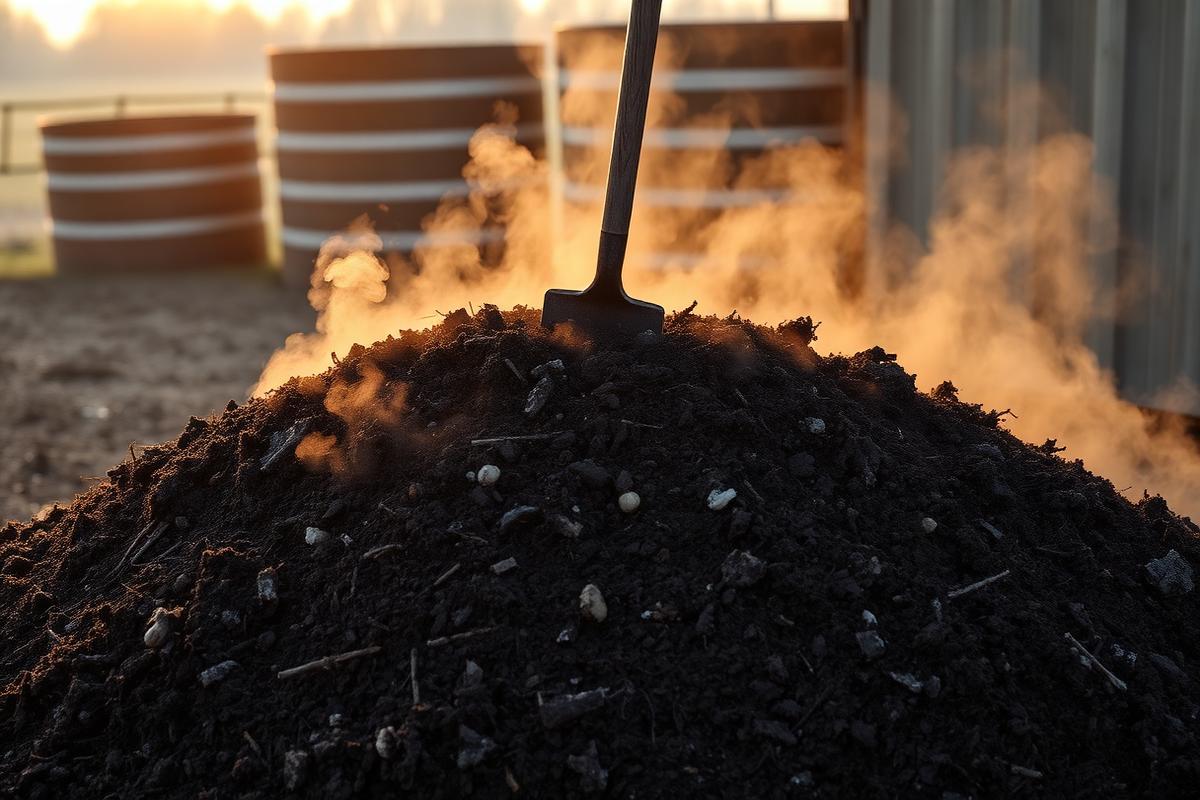
Almost every farmer I've worked with has tried composting at some point. Most give up on it inside two years — not because compost doesn't work, but because backyard piles simply do not scale to farm-relevant volumes. Doing compost at working-farm scale is a specific craft with a small handful of numbers you have to hit. Miss them and you build a smelly, slow, weed-seed-loaded liability. Hit them and you have the single most valuable soil amendment available anywhere at any price.
Why farm-scale compost is different
A backyard pile can afford to be slow, mediocre and inconsistent. A farm-scale system cannot. If you need 40–100 tons of compost a year to move the needle on a 10-acre operation, you need a system that produces thermophilic (hot) compost on a predictable schedule, kills weed seeds and pathogens, and stabilizes carbon into humus rather than losing it as ammonia gas. That means windrows, not bins; C:N discipline, not intuition; and a thermometer, not a timeline.
Well-made thermophilic compost has three properties a pile alone does not: it hits 131–160°F for at least fifteen consecutive days (killing weed seeds and pathogens per NRCS standards), it develops a specific dark, sweet, forest-floor smell (never ammonia), and it loses roughly 40–60% of its starting volume as water and CO₂ leave the pile.
The recipe: getting C:N right
The single most important number in composting is the carbon-to-nitrogen (C:N) ratio of the starting mix. The target is 25:1 to 35:1 by weight. Below 20:1 and the pile goes anaerobic and off-gases ammonia (that's the smell of a bad compost operation). Above 40:1 and the pile stalls — it will finish eventually, but on a two-year timeline instead of a three-month one.
Rough C:N values of common farm materials:
- Dry straw or old hay: 60–100:1
- Sawdust: 300–500:1 (use sparingly)
- Fall leaves: 50–70:1
- Green grass clippings: 15–20:1
- Fresh manure (cow): 15–20:1
- Poultry manure with bedding: 10–15:1
- Kitchen scraps / cull produce: 15–25:1
- Coffee grounds: 20:1
A simple, reliable farm windrow recipe: 3 parts (by volume) dry carbon (straw, leaves) to 1 part high-nitrogen (fresh manure or fresh green material) to 1 part balanced medium (produce culls, spent brewers grain, kitchen scraps). Water lightly as you build. A pile with the right recipe should feel like a wrung-out sponge — squeeze a handful and you get 1–2 drops, not a stream.
Building the windrow
The right windrow shape matters more than most beginners realize. Aim for a triangular cross-section, roughly 6 feet wide at the base by 4 feet tall. Smaller than that and the pile can't retain heat; larger than about 6 feet tall and the core goes anaerobic. Length is whatever your site allows. Build on well-drained ground — a slight (2–3%) slope is ideal to prevent leachate ponding. Never build over shallow water tables or within 100 feet of surface water.
Layer as you build: 6–8 inches of high-carbon, then a lighter layer of high-nitrogen, then a scatter of finished compost or good soil as inoculant, then repeat. The inoculant seeds the microbial community that will drive the pile. Water each layer lightly as it goes down. A finished windrow should be uniformly damp top to bottom.
Temperature is the whole game
Buy a compost thermometer with a 36-inch stem. It is the cheapest and most important tool in the operation. Push it in at multiple points along the windrow. Within 48–72 hours of construction, a well-built windrow should hit 120–140°F. Peak temperatures of 150–160°F in the first 7–14 days are ideal — that's where weed seeds and pathogens are killed.
Temperature above 165°F kills the biology you're trying to build. If it climbs that high, turn the pile immediately to release heat. Temperature dropping below 100°F means the biology has used up its accessible food and needs oxygen and remixing — turn again.
Turning: how often and when to stop
The classic thermophilic method turns five times over roughly 15 weeks: at day 3, day 10, day 21, day 45, and day 75. Each turn puts the outside on the inside so every particle reaches thermophilic temperatures for the required duration. Bucket loaders work at farm scale; a dedicated windrow turner is the leap you make around 200 tons per year.
Stop turning when temperatures no longer rebound above 100°F after a turn. That means the pile has entered the curing (mesophilic) phase and needs 4–8 more weeks of quiet, undisturbed time for the fungal community to mature and stable humus to form. Turning during curing sets you back weeks.
Knowing when it's finished
Finished compost is dark brown to nearly black; smells earthy and sweet, never ammoniated; is crumbly like coffee grounds and cool to the touch; and passes the germination test — plant lettuce or radish seeds in 50/50 finished compost and potting mix. Poor germination means the compost is still hot with soluble nitrogen or organic acids and needs more curing time.
Chemical maturity indicators are useful for larger operations: a C:N below 20:1 in the finished product, ammonia below 500 ppm, and a solvita CO₂ respiration test score of 5 or higher. For most farms, the smell-and-germination test catches immature compost reliably.
Applying compost like a tool
Not all compost applications are equal. The highest-return uses:
- Compost extract or tea at 20–50 gallons per acre, applied as a foliar or in-furrow drench. Highest microbial return per pound of finished compost.
- Banded compost at planting, 1–3 tons per acre placed in the row rather than broadcast. 2–3x more efficient than broadcast rates.
- Broadcast at 3–5 tons per acre, once every 2–3 years, for baseline organic-matter building on a working farm.
- Cover-crop seeding carrier, 500–1,000 lb per acre mixed with cover-crop seed at planting.
Repeated broadcast at high rates (10+ tons/acre annually) sounds virtuous but can accumulate phosphorus and salts to problem levels within a few years. Compost is a soil-biology tool first and a fertilizer second — apply it that way and the return per ton stays high.
A well-run farm compost operation is one of the highest-leverage systems any farm can build. It closes nutrient loops, converts on-farm waste into a premium input, and — once dialed in — provides the single most powerful soil amendment available. But it will not work on autopilot. Get the recipe, the temperature and the turning right, and the compost will pay back every hour spent on it.
Key takeaways
- ◆Farm-scale compost requires windrows, thermometry and C:N discipline, not intuition.
- ◆Target a 25:1–35:1 starting C:N ratio and 131–160°F sustained core temperatures.
- ◆Turn on temperature triggers, not a calendar; stop turning at curing.
- ◆Finished compost smells earthy, is dark and crumbly, and passes a germination test.
- ◆Compost is a biology tool first, a fertilizer second — banded and tea applications outperform broadcast.
Frequently asked questions
How long does it take to make finished compost on a farm?+
A well-managed thermophilic windrow reaches finished, mature compost in about 4–6 months: roughly 15 weeks of active thermophilic composting with five turns, followed by 4–8 weeks of curing. Cutting the curing phase short is the most common reason farm compost causes plant injury when applied.
What is the ideal C:N ratio for composting?+
Aim for a starting C:N ratio between 25:1 and 35:1 by weight. Below 20:1 the pile goes anaerobic and releases ammonia. Above 40:1 the pile stalls and finishes very slowly. Adjust by adding dry carbon (straw, leaves) or high-nitrogen materials (fresh manure, green grass) as needed.
Do I need a windrow turner to compost at farm scale?+
Not initially. A bucket loader or skid steer handles turning up to 100–200 tons a year without much trouble. A dedicated windrow turner becomes worthwhile above 200–300 tons annually or when composting becomes an income-generating enterprise in its own right.
How much compost should I apply per acre?+
For soil-building, 3–5 tons per acre broadcast every 2–3 years is typical. Banded applications at planting deliver 2–3× the return per ton at 1–3 tons per acre. Compost teas and extracts extend the microbial benefit even further per pound of finished product. Avoid consistent applications above 10 tons/acre annually — phosphorus and salts accumulate.
Keywords
- farm scale composting
- windrow composting
- compost c:n ratio
- compost temperature
- farm compost recipe
Related reading

Regenerative Farming
Regenerative Agriculture vs. Organic: What Actually Separates Them
Regenerative and organic overlap on the surface but diverge on what they measure, reward and forbid. A working agronomist's honest side-by-side comparison for farmers deciding which path fits.
July 10, 2026 · 11 min read
Regenerative Farming
Cover Crop Rotation Planning: A Season-by-Season Playbook
Design a cover-crop rotation that actually fits your cash crops, climate and equipment. A working agronomist's playbook with species mixes, seeding rates and termination timing.
June 2, 2026 · 10 min read

Soil Health
Building Healthy Soil: A Practical, Working-Farm Guide
How real farms build living, productive soil — a field-tested guide to soil biology, organic matter, cover crops and testing you can actually use this season.
May 14, 2026 · 12 min read