Regenerative Farming
Regenerative Agriculture vs. Organic: What Actually Separates Them
Regenerative and organic overlap on the surface but diverge on what they measure, reward and forbid. A working agronomist's honest side-by-side comparison for farmers deciding which path fits.

Published July 10, 2026 · 11 min read
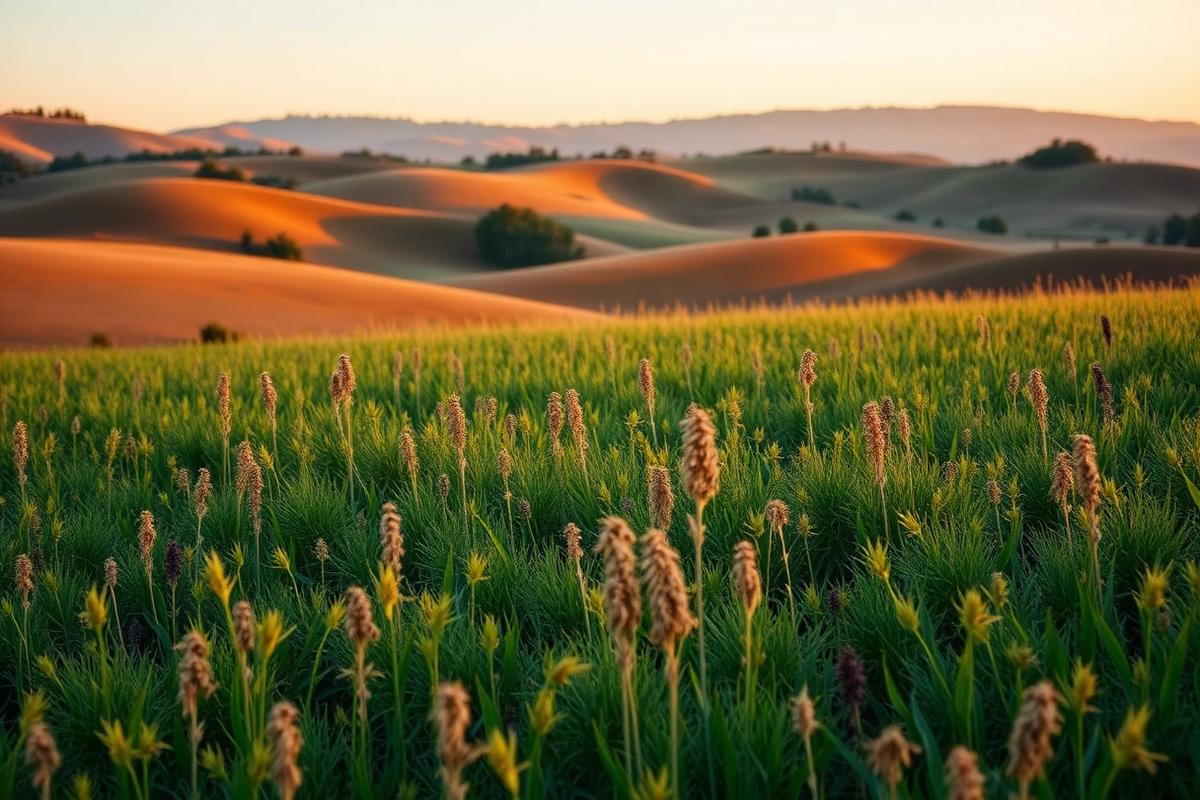
Almost every week a farmer asks me some version of the same question: should we go organic, or should we go regenerative? The framing itself is misleading. Organic is a legal certification with a defined rulebook. Regenerative, at the moment, is a movement, a philosophy, and — increasingly — a family of overlapping certifications built on top of it. The two are not opposites, not synonyms, and not interchangeable. This piece unpacks what actually separates them, where they agree, and how a working farm decides between them.
Two words, two different aims
Organic, in the United States, means one specific thing: a farm certified under the USDA National Organic Program (NOP). Every crop and livestock rule is codified. You can read the regulation. The aim of organic, at its origin, was to remove synthetic pesticides, synthetic fertilizers, GMOs and irradiation from the food system. It is fundamentally a practice-based, exclusionary standard: certain inputs are prohibited, certain practices are required, and if you follow the rulebook the certificate is yours.
Regenerative agriculture is a broader idea: farming in a way that measurably rebuilds soil, biodiversity, water cycles and rural community — rather than merely sustaining them. Its aim is outcomes: more soil carbon, more topsoil, more biological life, more water infiltration, healthier animals, healthier farmers. The methods regenerative growers use overlap heavily with organic — cover cropping, composting, diverse rotations, integrated livestock, minimum tillage — but the standard is what you can measure in the soil, not what's on a prohibited-inputs list.
That is the fundamental split. Organic asks: are you following the rules? Regenerative asks: is the land getting better?
What each one actually forbids
Certified organic in the U.S. forbids: synthetic pesticides and herbicides (with a handful of narrow exceptions), synthetic fertilizers, GMOs, sewage sludge, irradiation, most conventional livestock antibiotics and hormones, and any land that has received prohibited substances in the previous three years. It requires a written organic system plan, an annual audit, buffer zones from conventional neighbors, and complete traceability.
Regenerative, by contrast, forbids very little in the abstract — because it is aim-defined rather than input-defined. The dominant regenerative certifications (Regenerative Organic Certified, Land to Market, Savory Institute Ecological Outcome Verification) each apply their own rules, but the shared philosophy tolerates almost any practice that can be shown to be regenerating the land. In practice most serious regenerative operations avoid synthetic pesticides and heavy tillage, because the biology those disrupt is exactly what regenerative farmers are trying to rebuild. But regenerative also accepts practices organic often struggles with: adaptive multi-paddock grazing, no-till planting into terminated cover crops, use of biologicals and mineral amendments not on the organic list.
The most common misunderstanding I hear is that regenerative means "organic plus soil focus." It doesn't. Some of the strongest regenerative operations in the country are technically conventional — they use targeted herbicide burn-downs to enable no-till and to protect the soil biology tillage would otherwise destroy. Whether that trade-off is worth it is a legitimate debate. Pretending it doesn't exist isn't.
Outcome-based vs. practice-based
The philosophical difference cashes out in how each standard is verified. An organic inspector checks records: seed sources, input purchases, buffer distances, harvest logs. If your paperwork is clean and no prohibited substance is detected in a spot test, you pass. It is entirely possible — and, in some very large certified-organic operations, common — to run soil-degrading, monocultural, biologically sterile production and still be organic on paper.
An outcome-based regenerative certification measures the land itself. Regenerative Organic Certified layers soil health metrics (organic matter, aggregate stability, infiltration rate) and animal-welfare and social-fairness audits on top of the underlying organic certification. Land to Market's Ecological Outcome Verification takes annual field measurements — biological plant community, bare ground percentage, water cycle indicators — and requires a positive trend over time. You cannot pass by paperwork; the field itself has to be getting healthier.
This distinction matters enormously for two reasons. First, it changes what a farmer optimizes for: rules-followers vs. outcome-improvers behave very differently. Second, it changes what the label actually signals to a buyer. "Certified organic" tells you what the farmer didn't do. "Regenerative Organic Certified" tells you what the land became.
The certifications and what they cost
USDA Organic is the most established. Direct fees run from $400 to a few thousand dollars per year depending on farm size and certifier, with USDA cost-share programs reimbursing up to 75%. Add real costs for record-keeping labor, buffer land, and the three-year transition period during which you follow organic rules but cannot yet sell as organic — usually the hardest financial stretch.
Regenerative Organic Certified (ROC) requires existing organic certification plus additional soil health, animal welfare, and social fairness audits. Practical cost is organic certification plus roughly $500–$2,000 more per year at farm scale. ROC has three tiers (Bronze, Silver, Gold) reflecting depth of soil-health practices.
Land to Market / Savory EOV does not require organic underneath. It measures ecological outcomes on grasslands and pastures with an annual field monitoring visit. Cost is lower — often a few hundred dollars for smaller operations — but the market channel is narrower and mostly geared toward pastured-livestock brands.
Real Organic Project is an add-on label for USDA-organic farms that adds soil-based (no hydroponic) and pasture-based (no confinement) requirements. Cost is nominal but the label is only meaningful to a specific set of shoppers.
None of these certifications is required for a farm to be genuinely regenerative or genuinely organic. What they buy is a legal claim you can put on packaging and a signal that reduces buyer risk.
The market and the price premium
Organic still commands meaningful premiums at the wholesale and retail levels — typically 20–40% above conventional for produce and dairy, though narrower for commodity grain. The organic market grew steadily for two decades and softened only recently as conventional grocery began offering "clean label" alternatives that peel off less committed shoppers.
Regenerative premiums are less consistent because the market is younger and the labels are less recognized. Direct-to-consumer regenerative brands (grass-fed beef, pastured eggs, regeneratively grown grains) do capture real premiums — sometimes higher than organic — because the story travels well and the buyer is deliberately shopping the story. In commodity channels, regenerative price premiums remain small and inconsistent. That is changing as CPG buyers commit to sourcing targets, but on any given day the reliability of a regenerative premium depends heavily on who your buyer is.
For most farms, the honest financial answer is that organic is the more reliable premium today and regenerative is the more differentiated position five years out. Farms that can do both simultaneously (ROC-certified, for example) get the best of both worlds at a higher operating cost.
Which one fits your operation
A few practical filters we use with farmers deciding between paths:
- Choose organic first if you sell through wholesale, grocery or restaurant channels where the USDA label unlocks the door, or if your market shoppers care specifically about "no synthetic pesticides."
- Layer regenerative on top if you already meet organic and you can measurably show soil-health gains — the marketing lift is real for direct-to-consumer.
- Skip organic and go outcome-based if you're a pasture-based livestock operation with limited retail packaging and a buyer network that values grassland outcomes over inputs.
- Skip both certifications if your sales are almost entirely direct-to-farmer's-market or farm-store, your customer trusts you personally, and the certification fees would exceed the incremental price.
What no farm should do is treat "regenerative" as a marketing veneer over degrading practices. The word is doing real work in the industry, and the credibility of the movement depends on outcomes being measurable and honest. If you can't show a soil test from three years ago and a better one today, don't put the word on the label.
Neither organic nor regenerative is the "right" answer in the abstract. They are different tools for different farms in different markets. The right question isn't which one is better — it's which one, applied honestly, will make your specific operation more resilient, more profitable, and more worth handing to the next generation.
Key takeaways
- ◆Organic is a practice-based rulebook; regenerative is an outcomes-based aim.
- ◆Certifications like ROC and Land to Market bridge the two philosophies.
- ◆Organic still commands the more reliable price premium today.
- ◆Regenerative is the stronger differentiator in direct-to-consumer channels.
- ◆The honest test of any regenerative claim is measurable soil-health gain over time.
Frequently asked questions
Can a farm be both certified organic and regenerative?+
Yes — Regenerative Organic Certified (ROC) is specifically designed to layer on top of USDA Organic certification. Many of the most respected regenerative brands hold both. The double certification signals both what the farm avoids (organic prohibited inputs) and what the farm is actively rebuilding (soil, biodiversity, community).
Is regenerative farming cheaper than organic farming?+
Not necessarily. Regenerative operations often reduce fertilizer and pesticide bills significantly over 3–5 years, but early costs for cover-crop seed, monitoring equipment, and infrastructure like fencing for rotational grazing can be substantial. The savings tend to compound in year four and beyond.
Does regenerative farming require going 100% no-till?+
No. Reducing tillage is a widely shared regenerative principle, but full no-till is not required and is not always the right answer — some vegetable systems and heavy-clay soils still benefit from occasional targeted tillage. What matters is minimizing disturbance overall and rebuilding biology over time.
Which certification carries the highest market premium?+
It depends on channel. In mainstream grocery, USDA Organic still commands the most consistent premium. In direct-to-consumer specialty markets (grass-fed beef, regenerative coffee, artisan grains), a well-marketed regenerative label — especially ROC or a strong farm-brand story — can exceed organic pricing by a meaningful margin.
Keywords
- regenerative agriculture vs organic
- regenerative farming certification
- organic certification cost
- regenerative organic certified
- soil health farming
Related reading
Soil Health
Composting on a Working Farm: Systems That Actually Scale
Backyard piles do not translate to farm scale. A working agronomist's guide to windrow composting, C:N ratios, temperature management, and turning finished compost into a real soil-health tool.
July 12, 2026 · 12 min read
Regenerative Farming
Cover Crop Rotation Planning: A Season-by-Season Playbook
Design a cover-crop rotation that actually fits your cash crops, climate and equipment. A working agronomist's playbook with species mixes, seeding rates and termination timing.
June 2, 2026 · 10 min read

Soil Health
Building Healthy Soil: A Practical, Working-Farm Guide
How real farms build living, productive soil — a field-tested guide to soil biology, organic matter, cover crops and testing you can actually use this season.
May 14, 2026 · 12 min read