AgTech & Precision Farming
Controlled Environment Agriculture: The Real Economics of Greenhouses and Vertical Farms in 2026
A grower-oriented look at what greenhouses, high tunnels and vertical farms actually cost to build and run, which crops pencil out, and where the CEA industry is heading after the 2022–2024 shakeout.

Published July 17, 2026 · 13 min read
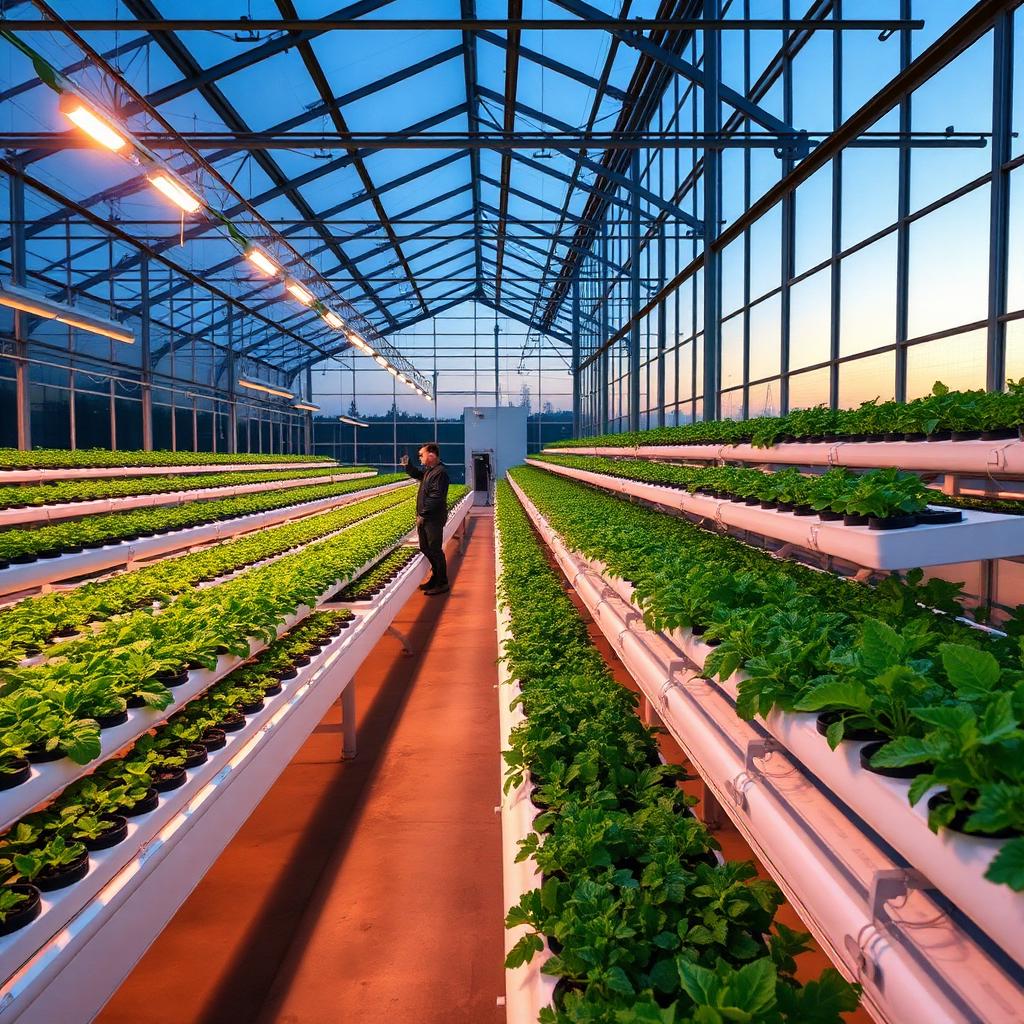
Between 2020 and 2024, more than $3 billion of venture capital poured into indoor vertical farms. By late 2024, at least eight of the largest players had filed for bankruptcy or shut down. Controlled Environment Agriculture (CEA) is not dead — greenhouse tomato and cucumber production is expanding, high tunnels continue to be the highest-return per-square-foot infrastructure on many small farms — but the industry's economics are now clear enough to make honest decisions. This guide is for a grower deciding whether to build.
What CEA actually covers
CEA is a spectrum, not a single technology. Where a project sits on that spectrum determines every subsequent economic question.
- High tunnels — unheated single-layer poly hoop structures. $4–$10 per sq ft installed. No supplemental light, minimal climate control. Best for extending the field season 6–10 weeks and growing high-value crops like tomatoes, peppers, cucumbers and salad greens.
- Passive-solar and lightly-heated greenhouses — double-poly or single-glass structures with heating for freeze protection. $15–$35 per sq ft installed. Grow year-round in most of the U.S. with strong economics on the same crops as high tunnels plus cut flowers and transplants.
- High-tech greenhouses — Dutch-style venlo glass with computerized climate control, hydroponic gutters, and often supplemental LED lighting. $80–$180 per sq ft installed. Where the vast majority of North American tomato, cucumber, pepper and cannabis production now happens.
- Vertical farms — fully enclosed indoor facilities with 100% artificial lighting, HVAC, and stacked growing racks. $250–$650 per sq ft of building footprint (before racks). Predominantly leafy greens, herbs and microgreens.
Each layer up the spectrum multiplies capex and operating cost. The corresponding revenue also rises — but not always fast enough.
The capital cost reality
Real 2026 build numbers on completed projects:
- 30 × 96 ft high tunnel (2,880 sq ft): $12,000–$28,000 turnkey. NRCS EQIP cost-share often covers 50–75% for qualifying farms.
- Half-acre passive-solar greenhouse (21,800 sq ft): $350,000–$750,000 depending on heating system and glazing choice.
- One-acre high-tech Dutch greenhouse: $3.5M–$7.5M complete with hydroponic systems, environmental controls and grading.
- 10,000 sq ft vertical farm (footprint): $2.5M–$6.5M for the building shell, racks, lighting and HVAC — before working capital.
Financing terms — not sticker price — decide viability. High tunnels amortize in 2–4 growing seasons on a market-garden operation. High-tech greenhouses need 10–15 year debt at low rates to pencil. Vertical farms typically need equity, not debt, because their revenue does not service commercial loan rates.
Operating costs and where they hit
The operating cost profile changes shape as you move up the spectrum. For a high tunnel, labor is the dominant cost (60–70%) and utilities are trivial. For a high-tech glass greenhouse, natural gas or electricity for heating and CO₂ enrichment can rival labor. For a vertical farm, electricity for lighting and HVAC becomes the single largest line item — often 25–40% of total operating cost.
Rule-of-thumb annual operating cost per square foot of growing area:
- High tunnel: $2.50–$5.00 (mostly seasonal labor).
- Passive-solar greenhouse: $6.00–$12.00.
- High-tech greenhouse: $18.00–$32.00.
- Vertical farm: $85.00–$180.00.
Compare those to the revenue potential of each system and the industry's shape becomes clear.
Which crops pencil out (and which do not)
Only a narrow band of crops carry the price-per-square-foot needed for CEA economics. The band gets narrower as capex rises.
- High tunnels: tomatoes ($8–$15/sq ft annual gross), cucumbers, peppers, salad greens, cut flowers, brassica transplants. Widely profitable.
- Passive-solar greenhouses: the above plus year-round leafy greens, herbs, transplant production for wholesale. Profitable when direct-market channels exist.
- High-tech greenhouses: beefsteak and specialty tomatoes ($40–$65/sq ft annual gross), cucumbers, peppers, herbs, cannabis. Profitable at scale and with premium markets.
- Vertical farms: baby leafy greens, herbs, microgreens, edible flowers, high-value pharmaceutical crops. Profitability remains difficult; most operators making it work either sell into ultra-premium retail channels or grow non-commodity specialty crops.
Crops that do not pencil in any CEA context at 2026 prices: field commodities (corn, wheat, soy), staple root vegetables (potatoes, carrots, onions), tree fruit at scale, and grain-fed livestock feed. The economics never close.
Vertical farms after the shakeout
The vertical-farming collapse of 2023–2024 was not a technology failure — the plants grew. It was a business-model failure. Three specific problems repeated across bankruptcies:
- Commodity leafy-green pricing. Wholesale spring mix and butter lettuce prices ($1.50–$3/lb) cannot support $85+/sq ft operating cost regardless of yield.
- Electricity as an uncontrollable variable. Grid prices rose 15–35% in most U.S. markets between 2021 and 2024. Every business plan built on 2020 kWh rates broke.
- Labor at scale. Automation covers seeding and packing well; it does not yet cover transplanting, plant-health scouting and system maintenance at competitive cost.
The vertical farms that are surviving and expanding in 2026 share a pattern: small-to-mid footprint (5,000–30,000 sq ft), direct urban customer relationships, specialty high-margin crops, and often co-location with a restaurant group or grocery brand that pays retail-adjacent prices for guaranteed local supply.
Who should actually build one
Honest recommendations by grower profile:
- Diversified market gardener under 5 acres: one to three high tunnels are almost always the highest-return infrastructure investment on the farm. Build first.
- Established grower with strong wholesale or CSA base and $500K–$1M to invest: a passive-solar or lightly-heated greenhouse expands season and product mix and typically pays back in 6–10 years.
- Investor building high-tech glass: requires industry experience, a specific buyer contract, and $5M+ equity. This is a career, not a diversification.
- First-time grower attracted to vertical farming: the numbers do not work at the scale most first-timers can finance. Start with a high tunnel and add complexity only when the market proves out.
Where CEA is heading
Three trends are shaping the next five years. First, LED lighting efficiency continues to improve — 3.0+ μmol/J fixtures are now standard versus 2.3 μmol/J in 2020, which meaningfully lowers vertical-farm electricity intensity. Second, high-tech greenhouse construction is consolidating around specific climate zones (Ontario, Kentucky, the Southwest) where energy and labor economics align. Third, high tunnels continue quiet, unglamorous growth as small farms discover they are the single most cost-effective piece of infrastructure available.
CEA is not the future of all agriculture. It is the future of a specific slice of production — high-value, perishable, appearance-critical crops sold into markets close to their consumption points. Built where it fits, it works. Built as a general solution to farming, it does not.
Key takeaways
- ◆CEA covers a wide spectrum from $4/sq ft high tunnels to $650/sq ft vertical farms — economics change at every level.
- ◆High tunnels are the most reliably profitable CEA investment for small and mid-scale growers.
- ◆High-tech greenhouses work with 10–15 year financing, specific crop mix and a strong wholesale channel.
- ◆Vertical farms mostly failed on commodity leafy greens; surviving operators serve premium urban specialty markets.
- ◆Match CEA capex to a proven buyer and crop, not to an aspirational business plan.
Frequently asked questions
Is a high tunnel worth it on a 1-acre market garden?+
Almost always yes. A single 30×96 ft high tunnel typically generates $15,000–$30,000 gross per year on tomatoes, cucumbers or salad crops — a 2–4 year payback even without cost-share. It is the highest-return capital investment most small growers can make.
Are vertical farms actually profitable anywhere?+
A minority are — typically small-footprint operations in high-price urban markets growing specialty crops (basil, edible flowers, microgreens, specialty Asian greens) into restaurant and premium-retail channels. Broad-market commodity leafy-green vertical farms have not proven profitable at 2026 electricity prices.
What is the biggest hidden cost in high-tech greenhouse construction?+
Site work and utility connection. On the projects that come in over budget, the greenhouse structure and equipment usually hit their estimates — but grading, drainage, electrical service upgrades and natural gas pipeline extensions routinely add 15–30% to the total build cost. Get firm utility quotes before signing.
How much cheaper are grid-tied solar or CHP for a greenhouse?+
On-site combined heat and power (CHP) can cut greenhouse operating cost by 20–35% at scale by producing electricity, heat and CO₂ for enrichment from one natural gas stream. Solar PV alone rarely pencils for greenhouses because heating load and light demand are highest when solar production is lowest; solar plus geothermal or biomass heating is a more common combination.
Keywords
- controlled environment agriculture
- vertical farming economics
- greenhouse crop budget
- cea business model
- hydroponic farm profitability
Related reading

AgTech & Precision Farming
Precision Agriculture: A Getting-Started Guide for Working Farms
A practical, working-farm introduction to precision agriculture — what tools actually change decisions on the ground, and which ones are still marketing.
July 8, 2026 · 10 min read
Market Gardening
Market Gardening: The First-Year Mistakes That Cost the Most
The pattern of expensive mistakes new market gardeners make in year one — and the small planning decisions that separate a viable second season from a shut-down.
July 1, 2026 · 8 min read
AgTech & Precision Farming
Smart Irrigation for Small Farms: Systems That Pay Back
Drip, sensors, and scheduling that actually work on 1–20 acres. Real system designs, costs, and the metrics that decide whether the investment pays for itself.
June 18, 2026 · 9 min read