Soil Health
Cover Crops for Small Farms: Species Selection, Timing and Termination
Cover crops feed soil biology, hold nitrogen and smother weeds for free. A practical guide to choosing species, fitting them into vegetable rotations, seeding rates, termination methods and what the economics really look like.

Published September 2, 2026 · 11 min read

Bare soil is a farm asset lying idle and leaking. Every month a bed sits uncovered, it loses nitrate to drainage, organic matter to oxidation and structure to raindrop impact. A cover crop reverses all three flows for the price of a few kilos of seed. The catch is that cover crops are crops - they need the right species, the right window and a deliberate termination, or they become the worst weed you ever planted.
What cover crops actually do
The benefits stack differently depending on species, but the core mechanisms are five. Living roots feed soil biology: a growing cover exudes sugars that sustain mycorrhizae and bacteria through months when the soil would otherwise starve. Fibrous roots hold nitrogen: a cereal rye cover can scavenge 50-100 kg of residual nitrate per hectare that would otherwise leach into groundwater over winter, releasing it to the next crop as it decomposes. Legumes add nitrogen: a good stand of hairy vetch fixes 80-150 kg N per hectare, enough to carry a following sweetcorn crop most of the way.
Above ground, canopy cover smothers weeds by shading them out of existence during establishment windows, and dense residues left after termination suppress germination for weeks into the cash crop. Finally, roots and residue build structure: aggregation, infiltration and the crumb that lets you work ground a week earlier in spring.
Choosing species by job
Pick the job first, the species second. The main cast for small farms:
- Cereal rye (winter rye). The workhorse. Germinates down to 2°C, grows whenever the temperature is above freezing, scavenges nitrogen, produces enormous biomass and terminates reliably. Seeded at 60-120 kg/ha in autumn, it is the default overwinter cover for any ground not carrying a crop.
- Hairy vetch. The nitrogen fixer for cold climates. Slow to establish but survives hard winters, then grows explosively in spring. Seeded at 20-30 kg/ha in late summer, often mixed with rye, which supports its vines and balances its carbon-rich residue.
- Oats. The self-terminating cover. Winterkills in most temperate climates, leaving a mellow, weed-suppressing mulch through which you can direct-seed in spring without tillage. Ideal before early spring plantings.
- Buckwheat. The summer gap-filler. Germinates in three days, flowers in thirty, smothers weeds and mobilises phosphorus. Frost-killed, so it terminates itself. Use it in any four-to-six-week summer window.
- Crimson clover. The under-sowing specialist. Establishes under a standing cash crop, fixes nitrogen after harvest, and fits where a dedicated cover window does not exist.
- Daikon (tillage) radish. The compaction breaker. A thick taproot drills through plough pans, then winterkills and rots, leaving vertical channels for water and the next crop's roots.
Single species versus mixes
The seed industry sells eight-way cocktail mixes with enthusiasm and small farms buy them with hope. The evidence is more modest: beyond two or three well-chosen species, additional components add cost faster than function. The proven combination is a grass plus a legume - rye with vetch, oats with field peas - where the grass provides carbon, structure and nitrogen capture while the legume fixes nitrogen and speeds residue breakdown.
A simple rule: one species for one job, two species for two jobs, and scepticism for anything beyond four. Every species in a mix also has to terminate at the same time with the same method, which is where elaborate mixes quietly fail.
Fitting covers into the rotation
Cover crops fail on small farms less from biology than from scheduling - the ground is never empty when the seed catalogue assumes it is. Three windows exist on almost every farm. The overwinter window: after the last autumn harvest, seed rye or rye-vetch for spring termination. The summer gap: the four-to-eight weeks between an early crop (peas, spring spinach, garlic harvest) and an autumn planting fits buckwheat or a cowpea cover exactly. The undersown window: crimson clover or annual ryegrass scattered into standing sweetcorn or brassicas at last cultivation establishes under the canopy and is already growing at harvest.
Map your beds a year ahead and mark which window each bed offers. A rotation plan that includes the cover crop by name - not as a vague intention - is the difference between cover cropping and occasionally throwing rye at bare ground.
Seeding rates and establishment
Underseeding is the most common establishment failure. Cover crop seed is cheap relative to what it does; starving the stand to save $10 per bed produces a thin, weedy cover that convinces you cover crops do not work. Broadcast rates run roughly 50% above drilled rates. For cereal rye broadcast on a small farm, 100-150 kg/ha is the honest range; hairy vetch 25-40 kg/ha; buckwheat 60-80 kg/ha; oats 100-140 kg/ha.
Seed-to-soil contact governs germination. Broadcast seed onto a freshly worked or cultipacked surface, then rake, roll or irrigate it in. Broadcasting onto hard, crusted soil in a dry September and waiting for rain gives you a bird feeder, not a cover crop. In dry regions, one pass of irrigation after seeding is worth more than doubling the rate.
Grazing as a termination tool
Farms with livestock hold a termination method the vegetable-only grower lacks: a ruminant. Sheep or cattle turned onto a standing rye or vetch cover convert biomass into manure in place, trample residue into soil contact, and terminate the stand without a single pass of machinery. The rules are short. Graze fast and hard - a high stocking density for one to three days, not a light stocking for two weeks, because selective grazing leaves the palatable legumes eaten to the crown and the fibrous stems standing. Move animals off before they graze into the crown of perennial covers or begin to poach wet ground; compaction from hooves on saturated soil costs more structure than the cover built. And respect the regrowth interval the following crop needs: grazed rye still has living roots and will regrow unless it was at anthesis, so plan a mowing or tarping pass behind the animals if any green remains. Done well, grazing a cover is the only termination method that pays you back the same day.
Termination methods
Termination is where planning pays or fails. The methods, in order of small-farm practicality:
- Mowing at flowering. Kills buckwheat, vetch and clover reliably, rye only after anthesis (pollen shed). Mow too early and rye regrows as a weed in your cash crop - the classic cover crop disaster.
- Roller-crimping. A drum with crimping bars lays and crimps rye at anthesis into a weed-suppressing mat, through which transplants go directly. Requires the rye to reach full flowering and stays the gold standard for no-till systems.
- Tarping (occultation). Mow or flail the cover low, then cover with opaque silage tarps for two to four weeks. The residue breaks down and weeds die in the dark. The best method for beds under 100 m².
- Winterkill. Choose oats, buckwheat, daikon or field peas where winters reliably kill them, and termination is free - but verify your climate actually delivers the kill.
- Tillage. Fast and certain, but it spends the soil-structure gains you grew the cover to build. Reserve it for heavy covers before fine-seeded crops.
Whatever the method, wait two to three weeks between terminating a grass cover and planting. Decomposing rye ties up nitrogen at the soil surface and exudes compounds that inhibit small-seeded germination. Transplants tolerate the wait better than direct seeding.
Common failures and fixes
The rye-that-became-a-weed: terminated before anthesis, it tillers back. Fix it by waiting for pollen shed or tarping. The nitrogen starved following crop: a high-carbon rye residue locks up nitrogen for weeks - follow heavy rye with a legume in the mix or add starter fertility to the cash crop. The unplantable mat: thick vetch-rye residue clogs seeders - use transplants, or flail-mow the residue finer. And the winterkill that did not kill: a mild winter leaves your self-terminating cover alive and growing in April - always have a mowing plan B.
The economics, honestly
Cover crop seed for a quarter-acre rotation runs $80-150 per year at small-farm rates, plus a few hours of seeding and termination labour. The returns arrive as nitrogen you did not buy (vetch's 100 kg/ha replaces $100-150 of organic-approved nitrogen sources), weeds you did not hoe, irrigation you did not run because infiltration improved, and - over three to five years - a measurable rise in organic matter that changes how the whole farm handles drought and rain.
The honest caveat: benefits compound annually while costs recur annually, so cover crops look weakest on a one-year spreadsheet and strongest on a five-year one. Treat the seed bill as soil infrastructure spending, not as a crop input, and the arithmetic settles into place.
Key takeaways
- ◆Choose the species by job: rye for biomass and nitrogen capture, vetch for nitrogen, oats and buckwheat for self-termination.
- ◆Seed generously - broadcast about 50% above drilled rates - and ensure seed-to-soil contact or irrigation.
- ◆Never terminate rye before anthesis, and wait two to three weeks between termination and planting.
- ◆Fit covers into three windows: overwinter, summer gaps between crops, and undersown beneath standing crops.
- ◆Tarping is the most reliable small-scale termination; roller-crimping suits no-till transplants.
Frequently asked questions
What is the best cover crop for beginners?+
Cereal rye. It germinates in near-freezing soil, grows all winter, forgives late seeding, scavenges leftover nitrogen and terminates reliably by mowing once it flowers. Seed 100-150 kg/ha broadcast in autumn.
When should I terminate a cover crop?+
Terminate grass covers like rye at anthesis (pollen shed) or they regrow, and wait two to three weeks before planting the next crop. Legumes like vetch can be mowed at early flowering. Always have a backup plan if a winterkill species survives.
Do cover crops replace fertiliser?+
Partly. A legume cover like hairy vetch can fix 80-150 kg of nitrogen per hectare, covering much of a following heavy feeder like sweetcorn. They do not supply phosphorus or potassium, and high-carbon covers temporarily tie up nitrogen.
Can I plant vegetables directly into a terminated cover crop?+
Yes - transplants go into rolled or tarped residue very successfully. Direct seeding is harder because thick residue clogs seeders and decomposing grass inhibits germination; wait two to three weeks or flail the residue finer.
Keywords
- cover crops for small farms
- cover crop species selection
- terminating cover crops
- winter rye cover crop
- cover crop seeding rates
Related reading

Regenerative Farming
No-Till Transition: What Actually Happens in Years One Through Five
An honest, year-by-year account of what to expect when a conventional farm converts to no-till — yield dips, weed shifts, equipment costs and the point where the system finally pays.
July 14, 2026 · 13 min read
Soil Health
Composting on a Working Farm: Systems That Actually Scale
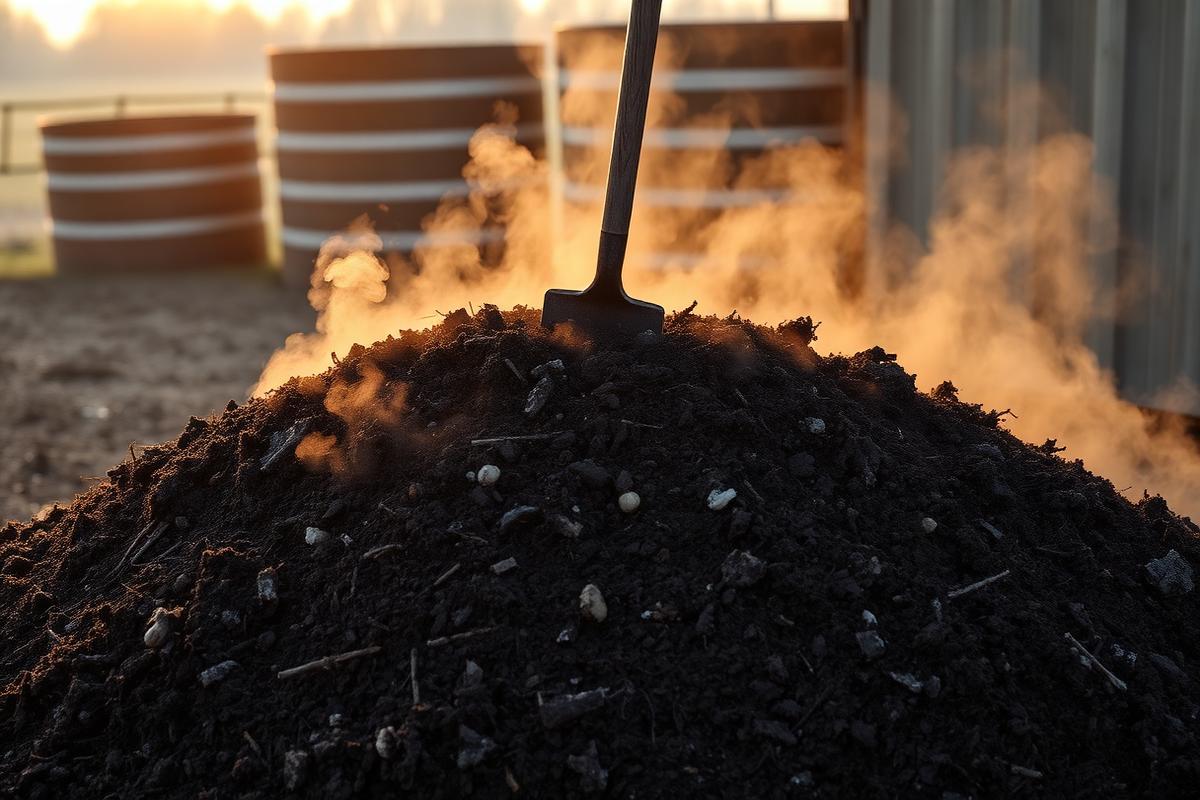
Backyard piles do not translate to farm scale. A working agronomist's guide to windrow composting, C:N ratios, temperature management, and turning finished compost into a real soil-health tool.
July 12, 2026 · 12 min read

Soil Health
Building Healthy Soil: A Practical, Working-Farm Guide
How real farms build living, productive soil — a field-tested guide to soil biology, organic matter, cover crops and testing you can actually use this season.
May 14, 2026 · 12 min read