Regenerative Farming
No-Till Transition: What Actually Happens in Years One Through Five
An honest, year-by-year account of what to expect when a conventional farm converts to no-till — yield dips, weed shifts, equipment costs and the point where the system finally pays.

Published July 14, 2026 · 13 min read
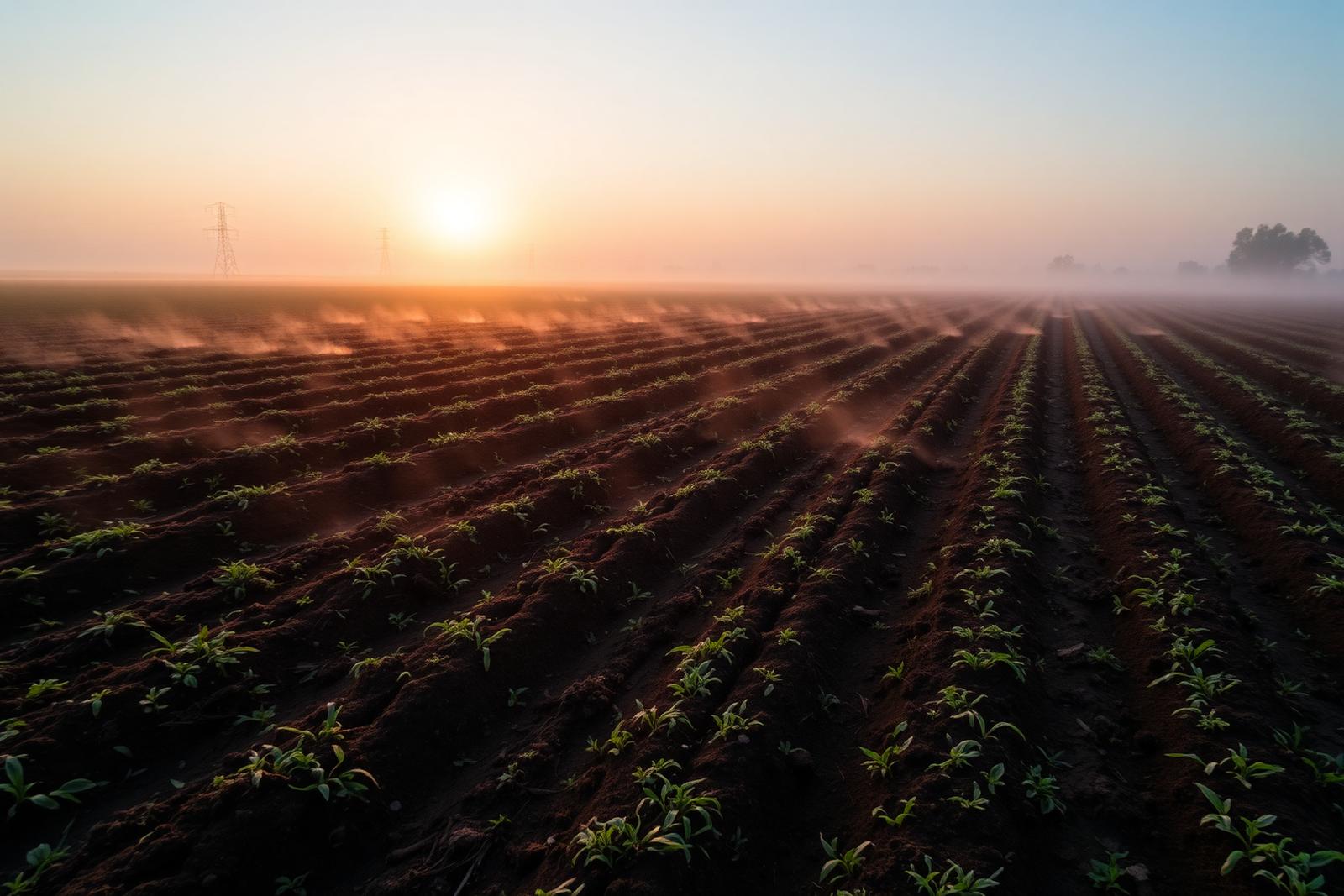
No-till is not a product you buy — it is a five-year systems change. I have walked dozens of operations through the transition, and the ones that succeed share less to do with soil type or acreage than with an honest expectation of what each year actually looks like. This guide is that honest expectation.
Why farms transition — and why they stall
The economic case for no-till is well documented. USDA-ERS data pins the fuel, labor and equipment savings at roughly $30–$60 per acre per year on row-crop operations once the system is mature. Add in soil-organic-matter gains of 0.3–0.5% over five years, better water infiltration, and reduced erosion, and the long-run math is clearly favorable.
The reason so many transitions stall is that the short-run math is not favorable. Years one and two typically cost money — sometimes real money — and farms that budgeted only for the average yearly outcome discover they have to survive an outlier before the average shows up. Everything below is written to make that survivable.
Year one: the honest yield hit
Expect a yield reduction of 5–15% on row crops in the first year, concentrated in fields with poor structure or drainage. This is not because no-till is worse than tillage — it is because your soil biology, residue-decomposition ecosystem and planter setup are all calibrated for tilled ground. When you stop tilling, three things happen:
- Cooler, wetter spring soils delay germination by 3–7 days in cool climates.
- Residue mats interfere with seed-to-soil contact if your planter is not equipped with row cleaners and heavier down-pressure.
- Nitrogen tie-up in high-carbon residue temporarily reduces N availability to the emerging crop.
None of these are permanent. All of them are predictable. Budget for the dip, adjust planter setup before spring, and consider a starter fertilizer band placed 2×2 from the seed row. Never do a whole-farm conversion in year one — start with 20–30% of your acres on your best-drained soils.
Year two: weed pressure shifts
Year two is when the weed complex changes and catches many farmers off guard. Annual grasses that thrived in tilled seedbeds decline. In their place, small-seeded broadleaves — marestail, waterhemp, giant ragweed — press harder, along with perennial creepers like Canada thistle. If your only defense was tillage, you have to rebuild a chemical or mechanical alternative fast.
The successful playbook in year two:
- Establish a residual pre-emergent herbicide program appropriate to your rotation.
- Add a fall cover crop specifically for weed suppression — cereal rye is the workhorse.
- Scout every field every two weeks. In no-till, small weed problems become big weed problems in a hurry.
Farmers doing organic no-till lean harder on roller-crimped cover crop mulches — 8,000+ lb/acre of terminated rye biomass will suppress most annual weeds through cash-crop canopy closure.
Year three: biology wakes up
Year three is where the mood on the farm changes. Earthworm counts, which fall or plateau in year one, typically triple or quadruple by season three. Aggregate stability — the crumb structure that lets water infiltrate rather than pool — becomes visibly obvious after heavy rains. Soil organic matter, if measured on a good lab test, will show a 0.15–0.30% gain from baseline.
Practically, this shows up as:
- Less standing water in low spots after major rains.
- Better late-season crop performance during dry spells.
- A noticeable reduction in the amount of synthetic nitrogen needed for the same yield.
This is also the year to expand no-till to the rest of the operation — you have proof of concept, you have refined the equipment setup, and you have absorbed the year-one learning curve.
Year four: economics turn
By year four, the operating cost per acre has usually dropped enough to close the yield-revenue gap. On the operations I have advised, diesel use falls 40–60%, hours on tractors fall similarly, and repair-and-maintenance runs 20–30% below the tilled baseline. Fertilizer bills often decline 10–20% as biological nitrogen cycling recovers.
Yield, meanwhile, is back to or above the tilled baseline on most soils. The exceptions are heavy, poorly drained clays without tile — those fields may need cover crops with aggressive root systems (tillage radish, sunn hemp) for another season or two to see parity.
Year five: what a mature system looks like
A mature no-till system in year five is a fundamentally different farm than the one you started with. Cover crops are in every fallow window. Rotations include at least three crop families. Soil organic matter is climbing at roughly 0.1% per year. Herbicide use is often lower than it was in year one — not higher — because a covered soil surface simply grows fewer weeds. Diesel, labor and machinery costs are all structurally lower.
Perhaps most importantly, drought resilience is transformed. USDA data from the 2012 drought shows continuous no-till fields with cover crops yielded roughly 11% higher than tilled fields of the same soil type in the same year — a margin that dwarfs almost any input decision.
The equipment question
You do not need to buy a new planter to start. You do need to make sure your existing planter can handle residue. The three upgrades that matter most:
- Row cleaners ($150–$400 per row) — non-negotiable for residue-heavy fields.
- Heavier down-pressure springs or hydraulic down-force — for consistent seed depth.
- Closing wheels designed for firm residue — spike or spader wheels beat solid rubber.
Total upgrade cost on a 12-row planter is typically $15,000–$40,000 — recovered in fuel and labor savings inside four seasons for a 500+ acre operation.
The five mistakes that end transitions
- Converting the whole farm in year one. You need clean acres to feed the cash flow through the transition dip.
- Skipping the planter upgrade. Poor stand establishment will convince you no-till doesn't work; it was actually the row units.
- No cover crop plan. Continuous no-till without living roots stalls out in year two.
- Panicking at the first weed escape. Adjust the program; don't abandon the system.
- Not tracking soil metrics. Without a real soil test in year one and year three, you can't see the compounding gains that justify the pain.
No-till is a discipline, not a technology. The farms that stick with it for five years almost universally say the same thing: they would never go back.
Key takeaways
- ◆Budget for a 5–15% yield dip in year one and start with 20–30% of your acreage.
- ◆Year two's biggest challenge is a shifting weed complex, not soil biology.
- ◆Real biological gains show up in year three; economic parity typically in year four.
- ◆The three highest-ROI planter upgrades are row cleaners, down-pressure and residue-ready closing wheels.
- ◆The farms that fail almost always converted too much, too fast, without a cover crop plan.
Frequently asked questions
How much yield loss should I budget for in year one?+
Plan for a 5–15% reduction, concentrated in cool, poorly drained fields. On well-drained soils with good residue management and a properly equipped planter, yield loss can be as low as 2–3%. Do not convert your entire farm in year one — start with 20–30% of acres.
Do I need to buy a no-till drill or planter?+
Rarely at first. Most existing planters can be retrofitted with row cleaners, heavier down-pressure, and residue-appropriate closing wheels for $15,000–$40,000 on a 12-row unit. Only buy a dedicated no-till drill if your rotation includes small-grain broadcast seeding at scale.
When does no-till pay?+
Break-even on operating cost typically arrives in year 3–4 on row-crop operations. Full payback including soil-value gains typically arrives by year five, after which the system runs 15–25% cheaper per acre than the tilled baseline for the life of the farm.
Can I do no-till organically?+
Yes, but the playbook is different — you replace herbicide burn-downs with roller-crimped cover crop mulches. It works well in soybeans and corn, is harder in small grains, and requires stricter cover crop biomass targets (8,000+ lb/acre).
Keywords
- no-till farming transition
- no-till year one
- reduced tillage yield loss
- no-till equipment costs
- cover crop termination
Related reading

Regenerative Farming
Regenerative Agriculture vs. Organic: What Actually Separates Them
Regenerative and organic overlap on the surface but diverge on what they measure, reward and forbid. A working agronomist's honest side-by-side comparison for farmers deciding which path fits.
July 10, 2026 · 11 min read
Regenerative Farming
Cover Crop Rotation Planning: A Season-by-Season Playbook
Design a cover-crop rotation that actually fits your cash crops, climate and equipment. A working agronomist's playbook with species mixes, seeding rates and termination timing.
June 2, 2026 · 10 min read

Soil Health
Building Healthy Soil: A Practical, Working-Farm Guide
How real farms build living, productive soil — a field-tested guide to soil biology, organic matter, cover crops and testing you can actually use this season.
May 14, 2026 · 12 min read