Homesteading
Farrowing Hogs on Pasture: A Practical Guide for Smallholders
A comprehensive guide to farrowing hogs on pasture, covering breed selection, hut design, nutrition, and predator protection for small-scale farmers.

Published July 19, 2026 · 7 min read
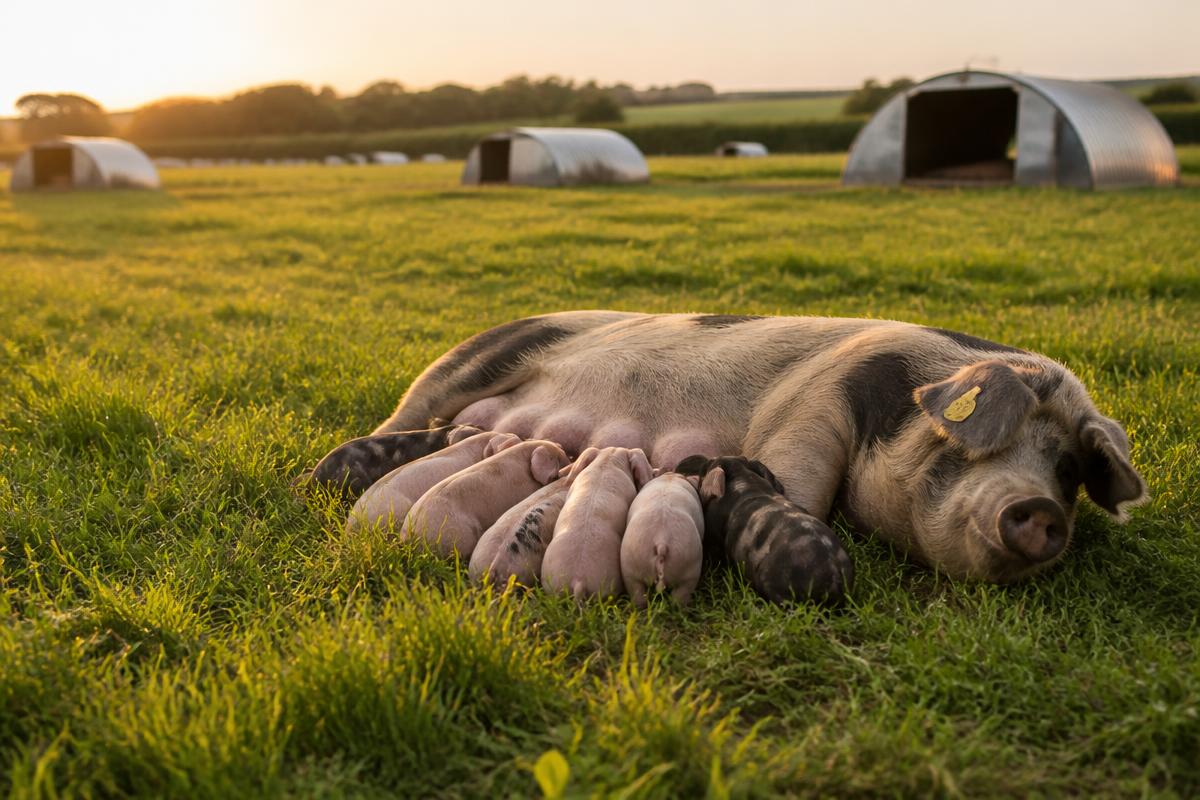
For the smallholder looking to produce high-quality pork while prioritizing animal welfare and soil health, pasture farrowing offers a regenerative alternative to the confinement systems of industrial agriculture. By allowing sows to give birth in a natural environment, you reduce infrastructure costs, minimize disease pressure, and produce hardier piglets. However, successful outdoor birthing requires more than just opening a gate; it demands meticulous planning, specific gear, and a deep understanding of porcine behavior.
1. Breed Selection: Choosing the Outdoor Specialist
Not all hogs are built for the elements. Industrial breeds like the Landrace or Yorkshire have been bred for climate-controlled barns and may struggle with the temperature swings and maternal instincts required for pasture life. For successful pasture farrowing, prioritize "heritage" genetics known for mothering ability, foraging drive, and hardiness.
- Berkshire: Known for incredible meat quality and a docile temperament, making them easy to handle during farrowing.
- Tamworth: The "bacon hog" is exceptionally hardy, active, and has a long snout perfect for foraging. They are protective mothers.
- Old Spot (Gloucestershire): Often called the "orchard pig," they are calm, thrifty, and possess excellent milk production.
- Large Black: Famous for their maternal instincts and ability to raise large litters on low-input forage.
2. Paddock Setup and Site Selection
Your farrowing paddock is the foundation of piglet survival. A common mistake is choosing a low-lying area that collects water. Wet, muddy conditions are the leading cause of "chilled" piglets and increased crushed mortality.
The Golden Rules of Paddock Design:
- Drainage: Choose high ground with a slight slope. In rainy regions (like the Pacific Northwest or the UK), ensure the soil is well-drained or use heavy bedding.
- Size: Aim for roughly 1/4 to 1/2 acre per sow. This prevents "mud-up" and reduces parasite build-up.
- Fencing: Use woven wire (no-climb) with a strand of electric wire at the bottom (6 inches off the ground) to prevent piglets from slipping through and sows from rooting under.
3. Hut Design: The Mobile Nursery
In a pasture system, the farrowing hut replaces the farrowing crate. The design must protect the piglets from the sow's weight while keeping them dry. The "A-Frame" or "modified port-a-hut" designs are industry standards.
Crucial Features:
- Fender/Guard Rails: Install rails 6–8 inches off the ground and 6 inches out from the walls. This creates a "safe zone" where piglets can escape when the sow lies down.
- Ventilation: Use huts with rear vents that can be opened in summer and closed in winter.
- Portability: Huts should be on skids so they can be moved to fresh ground between litters.
- Bedding: Use marsh hay or crushed wheat straw. Avoid long, "stringy" straw that can tangle around tiny legs or prevent piglets from reaching the teat.
4. Pre-Farrowing Care and Nutrition
A sow’s nutritional needs skyrocket in the last 21 days of gestation. While she is on pasture, the forage alone is rarely enough to support fetal growth and subsequent lactation.
The Transition Diet: Increase her caloric intake but keep fiber high to prevent constipation, which can lead to farrowing complications. Introduce her to the farrowing paddock 10–14 days before her due date. This allows her to "nest" and builds her immunity to the specific microflora of that patch of land—immunity she will pass to her piglets through colostrum.
5. The Birthing Process: When to Intervene
The beauty of pasture farrowing is that sows usually handle the work themselves. However, you must be a "shadow observer." Monitor from a distance. Signs of impending labor include "nesting" behavior (carrying mouthfuls of hay), enlarged teats, and a drop in the vulva.
Safety Tip: Even the gentlest sow can become aggressive when in labor. Always have a "sorting board" or a physical barrier between you and the sow if you must enter the hut.
Assistance Checklist: If a sow goes more than 45 minutes between piglets, or if she is straining without progress, veterinary intervention may be necessary. For smallholders, "sleeving" (manually checking the birth canal) should only be done with sterile gloves and plenty of lubricant to prevent infection.
6. Improving Piglet Survival Rates
The first 48 hours are the most dangerous. In an outdoor system, the primary threats are hypothermia and crushing.
- The "Step-Over" Board: Place a 10-inch board across the hut door for the first 5 days. This keeps the piglets inside the safe, bedded environment of the hut while allowing the sow to step over and go out to graze/defecate.
- Iron Supplementation: Soil provides some iron, but in fast-growing heritage breeds, a boost may be needed. Many pasture farmers provide a "creep" area with fresh, clean sod from a different field or an iron injection on day three.
- Predator Control: Livestock Protection Dogs (LPDs) or high-voltage electric perimeter fencing are vital to protect small piglets from foxes, coyotes, or crows.
7. Nutrition for the Lactating Sow
A lactating sow can require 12–18 lbs of high-quality (16-18% protein) feed daily, depending on litter size. If she loses too much body condition on pasture, she will be difficult to breed back. Supplement her grazing with a balanced ration and ensure she has access to limitless clean water. A sow producing milk for 10 piglets can drink 5–8 gallons of water a day.
8. Parasite Management: The Pasture Challenge
Parasites are the primary drawback of pasture farrowing. Internal parasites like large roundworms (Ascaris suum) thrive in soil.
- Rotation: Never farrow in the same paddock twice in a row. Allow at least 6 months (ideally a year) of rest or haying between pig uses.
- Natural Controls: Some farmers use diatomaceous earth or garlic, but scientific efficacy is low. A strategic deworming of the sow 2 weeks before moving to the farrowing paddock is the most effective way to prevent passing a heavy load to the piglets.
9. Weaning in a Pasture System
In nature, weaning is a gradual process. For the smallholder, weaning at 6–8 weeks (rather than the industrial standard of 3 weeks) allows the piglets’ digestive systems to fully mature on a diet of mother’s milk and forage.
To reduce stress, use "fence-line weaning." Move the sow to an adjacent paddock where she and the piglets can still see and smell each other through the fence, but the piglets cannot nurse. This prevents the "weaning crash" often seen in confinement systems.
10. Regional Considerations
Hot Climates (The South/Midwest): Shade is more important than the hut itself. Sows cannot sweat. If farrowing in July, you must provide a wallow—a shallow mud hole—for evaporative cooling. Ensure the hut is positioned to catch prevailing breezes.
Cold Climates (The North/High Altitudes): Use deep-bedded "packs" of straw. If farrowing in sub-freezing temps, you may need a specialized farrowing hut with a "creep box" where a heat lamp can be safely mounted out of reach of the sow (ensure all wiring is professional-grade to prevent fires).
Summary Table: Success Checklist
| Factor | Pasture Requirement |
|---|---|
| Genetics | Heritage breeds (Tamworth, Berkshire, etc.) |
| Infrastructure | A-frame huts with guard rails and 10" step-over boards |
| Biosecurity | 12-month paddock rotation to break parasite cycles |
| Water | High-flow drinkers or troughs; 8+ gallons per day during lactation |
Conclusion
Pasture farrowing is both an art and a science. It requires a shift from "controlling" the environment to "managing" the animal within her natural habitat. While the labor may be different—moving fences and huts instead of power-washing concrete—the rewards are significant. You will find that pigs raised on pasture are more resilient, the meat is more flavorful, and the satisfaction of seeing a sow and her litter roaming through green grass is the ultimate reward for the dedicated smallholder.
Weaning and Post-Farrowing Management
In a pasture-based system, weaning typically occurs later than in intensive indoor operations, usually between six and eight weeks. This extended period allows the piglet’s digestive system to mature, making them better equipped to handle a forage-based diet. Managing the transition effectively ensures that the sow recovers her body condition quickly for the next breeding cycle and that the piglets maintain their growth momentum.
When initiating the weaning process, it is often less stressful to move the sow rather than the piglets. By leaving the "weaners" in a familiar paddock, you minimize the environmental stress that can lead to post-weaning scours. Consider the following strategies for a successful transition:
- Gradual Dietary Shifts: Introduce high-quality creep feed two weeks prior to weaning. This stimulates enzyme production necessary for digesting grain and plant proteins.
- Sow Condition Recovery: Once the piglets are removed, increase the sow's caloric intake immediately. Lactation is incredibly draining; she will need a nutrient-dense ration to return to her "flushing" state for re-breeding.
- Social Stability: Keep littermates together as long as possible. Mixing unfamiliar piglets during the stress of weaning can lead to fighting and suppressed immune systems.
- Water Access: Ensure waterers are at a height a piglet can reach. In large pastures, piglets may struggle to find water if the sow is no longer leading them to the source.
Parasite Control in Outdoor Hog Systems
One of the primary challenges of outdoor farrowing is the increased exposure to internal and external parasites. Unlike concrete-based systems that can be bleached, soil holds parasite eggs (like Ascaris suum) for years. A robust management plan is essential to prevent stunted growth in piglets and anemia in sows.
Effective control relies more on management than on chemical intervention alone. Strategic rotation is your most powerful tool. By practicing "all-in, all-out" pasture management, you break the life cycle of common swine parasites. Ideally, a farrowing paddock should rest and be exposed to sunlight (UV rays) for several months before pigs return to it.
Key components of an outdoor parasite program include:
- Strategic Deworming: Treat sows two weeks before they move into the farrowing pasture. This prevents them from shedding eggs that will infect their newborn piglets.
- Vegetation Management: Keep pasture height at an intermediate level. Extremely short grass forces pigs to graze close to the soil where parasite larvae congregate, while overgrown brush can harbor ticks and lice.
- Wallower Maintenance: While mud is necessary for cooling, stagnant, permanent mud holes are breeding grounds for pathogens. Rotate the location of wallows or use portable overhead misters to provide cooling without the buildup of deep, contaminated mire.
- Fecal Monitoring: Conduct periodic fecal egg counts (FECs) through your veterinarian to ensure your chosen dewormer is still effective against local parasite populations.
Key takeaways
- ◆Select heritage breeds for better mothering instincts and outdoor resilience.
- ◆Use A-frame huts with crush rails to significantly reduce piglet mortality from crushing.
- ◆Provide deep, dry wheat straw for nesting to prevent piglet hypothermia.
- ◆Ensure farrowing paddocks have excellent drainage and are rotated to prevent parasite buildup.
- ◆Lactating sows require significant supplemental calories beyond what they can forage on pasture.
Frequently asked questions
Can a sow farrow on pasture without supplemental grain?+
While the sow will graze, she requires high-protein supplemental feed (16-18%) to sustain milk production and maintain her body weight during lactation.
What are the best hog breeds for pasture farrowing?+
Heritage breeds like Tamworth, Berkshire, and Hereford are generally better suited due to their hardiness and stronger maternal instincts compared to commercial white breeds.
When should I move my sow to the farrowing paddock?+
The ideal time is 7 to 10 days before her expected due date. This gives her time to settle in, claim a hut, and begin her nesting behaviors.
How do I prevent the sow from crushing piglets in an outdoor hut?+
A-Frame huts or Port-A-Huts with interior crush rails are the most effective at preventing the sow from accidentally laying on her piglets.
Keywords
- farrowing hogs on pasture
- pasture-raised pork
- farrowing huts
- heritage pig breeds
- swine management
- outdoor hog farming
Related reading

Regenerative Farming
Silvopasture on Small Acreage: Trees, Livestock and Pasture in One System
How to integrate widely spaced trees with grazing animals on 5–40 acres — species selection, spacing, establishment costs, animal welfare gains and the ten-year economic case.
July 15, 2026 · 13 min read
Homesteading
Pasture-Raised Poultry: The Economics of a 200-Bird Flock
A transparent enterprise budget for a 200-bird pastured broiler operation — feed, infrastructure, labor, processing, sales and the actual take-home margin per bird.
July 13, 2026 · 12 min read