Market Gardening
Growing Garlic for Market: A Hardneck Grower's Complete Guide
Hardneck versus softneck, clove selection, fall planting depth, mulch, scape timing, curing, storage and the per-bed economics of growing garlic as a cash crop.

Published August 5, 2026 · 8 min read
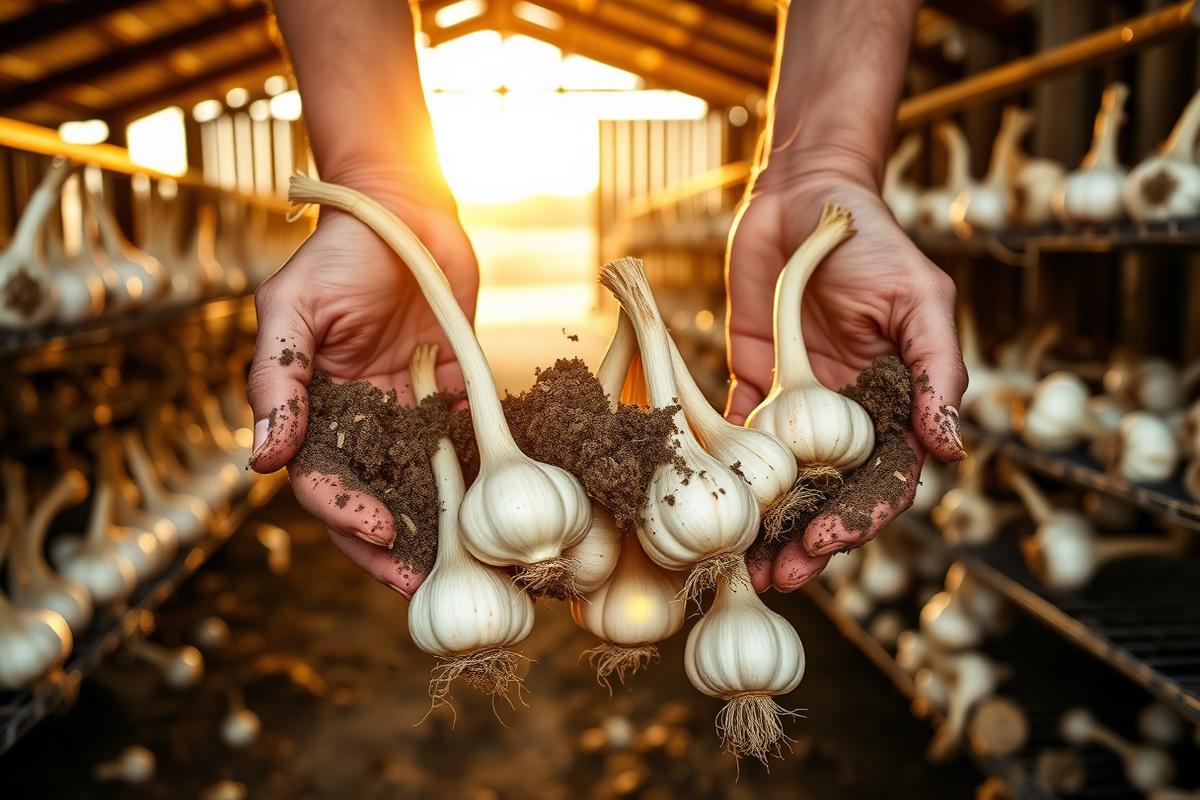
Garlic is the crop that fits the gaps. It goes in the ground in October when the market beds are emptying, occupies space through a winter when nothing else is productive, and comes out in July in time for a fall brassica or a cover crop. It requires no greenhouse, no transplanting, no trellis and almost no irrigation in a normal year. It stores for months, so it sells long after the harvest crush, and a portion of every crop becomes next year's seed at no cash cost.
It is also easy to grow badly. Undersized bulbs, rot in a wet spring and a botched cure are the three failures that turn a promising crop into compost. Here is the full cycle, from choosing stock to counting the money.
Why Garlic Belongs in a Market Rotation
Four reasons growers keep coming back to it. Labor falls outside the peak season, concentrated in an October planting week and a July harvest week. Cash flow is excellent because cured garlic holds its quality for four to eight months and sells at full price in November when little else is coming off the farm. Price resistance is low: a customer who balks at $4 for a lettuce head will pay $2.50 for a single bulb of a named hardneck variety without blinking. And the seed cost drops to zero after year two once you are replanting your own best bulbs.
The trade-off is ground time. Garlic occupies a bed for roughly nine months for a single harvest. Judge it on annual revenue per bed foot rather than on days-to-maturity, and it still competes well against most storage crops.
Hardneck or Softneck?
Hardneck types send up a central flower stalk, the scape, and produce four to twelve large, easy-peeling cloves in a single ring. Flavor is more complex and the market premium is real. Rocamboles such as German Red and Spanish Roja offer the best flavor but the shortest storage, four to six months. Porcelains such as Music, Georgian Crystal and Romanian Red give huge bulbs, excellent cold hardiness and seven to nine months of storage; Music is the workhorse variety for most northern market growers. Purple stripes such as Chesnok Red sit between the two and roast exceptionally well.
Softneck types produce no scape, carry more but smaller cloves in overlapping layers, store nine to twelve months and can be braided. Artichoke and silverskin types dominate supermarket supply and perform better in mild-winter regions where hardnecks struggle to vernalize.
For a direct-market farm in a cold climate, plant 70 to 80 percent hardneck for the flavor premium and the scape crop, with a softneck block for late-winter sales and braids. In zones 8 and warmer, invert that ratio.
Seed Stock and Clove Selection
Buy certified, disease-free seed garlic from a grower in a climate similar to yours. Never plant supermarket garlic; it is frequently treated to inhibit sprouting and can import white rot, a soil pathogen that persists in the ground for two decades and ends garlic production on that field permanently.
Bulb size drives clove size, and clove size drives next year's bulb size. Break bulbs apart no more than 48 hours before planting, keeping the papery skin on each clove, and plant only the largest cloves from the largest bulbs. Small inner cloves go to the kitchen. This one habit, applied consistently, increases average bulb size measurably within three seasons.
Plan quantities carefully: one pound of seed garlic yields roughly 50 cloves for a porcelain hardneck and returns six to eight pounds of harvested bulbs. A 100-foot bed at 6-inch spacing across four rows takes about 800 cloves, or 16 pounds of seed.
Ground Prep and Fall Planting
Garlic is a heavy feeder that will not tolerate wet feet. Choose the best-drained ground on the farm, and never follow onions, leeks or a previous garlic crop; hold a four-year allium rotation to keep white rot and stem nematode out.
Work in two to three inches of finished compost plus a balanced organic fertilizer supplying roughly 100 lb of nitrogen per acre. Target pH 6.5. Form raised beds if there is any question about drainage.
Plant two to four weeks before the ground freezes hard: early to mid-October across most of the northern tier, late October to November further south. Too early and the tops grow tall and winterkill; too late and the clove fails to root before freeze-up and heaves out of the soil.
Set cloves pointed end up, two inches deep in heavy soil and three in sandy ground, at six inches in row with six to eight inches between rows. Then mulch four to six inches deep with straw. Mulch is not optional in a cold climate: it prevents frost heaving, suppresses the spring weeds that garlic competes with poorly, and conserves moisture through the June bulking period.
Spring Management and Scapes
Shoots push through the mulch as soon as soil warms. Pull mulch back from directly over any shoot that struggles, but leave the bed covered otherwise.
Side-dress nitrogen twice, once at first green-up and again three weeks later, using blood meal or fish emulsion. Stop all nitrogen by the time the plant reaches five or six leaves, usually late May. Feeding past that point pushes soft growth, delays maturity and shortens storage life.
Irrigate to one inch per week through May and June, the bulking window, then cut water entirely two to three weeks before harvest. Bulbs sized in wet soil have stained wrappers, rot in storage and cure poorly.
Snap scapes on hardnecks when they have made one full curl, usually mid to late June. Removing them redirects energy into the bulb and adds 15 to 25 percent to final weight. They are also a genuine second crop: scapes sell for $8 to $12 per pound at market for the two or three weeks they exist, and a 100-foot bed can produce 15 pounds of them.
Reading the Plant at Harvest
Harvest timing separates good garlic from great garlic, and the window is about ten days wide.
The rule of thumb is to lift when the lower three to four leaves have browned and five or six remain green. Each green leaf corresponds to one intact wrapper layer around the bulb, and wrappers are what protect it in storage. Wait too long and the wrappers deteriorate underground, the bulb splits open and it will not keep.
Confirm by digging a test bulb: it should be fully divided into distinct cloves with tight, unbroken skin. Loosen plants with a digging fork rather than pulling by the stem, and never break the neck; the whole plant goes into curing intact. Handle bulbs like eggs, since bruised garlic rots.
Curing and Storage
Cure in a shaded, dry, well-ventilated space with continuous airflow. A barn loft with box fans works. Never cure in direct sun, which cooks the bulbs, and never in a closed space, where they mold.
Hang in bundles of eight to ten plants or lay single-layer on mesh racks with a fan running for three to four weeks. Garlic is cured when the neck is dry and stiff, the outer wrappers rustle like paper and the roots are brittle.
Then trim roots to a quarter inch and cut stems to one inch, or leave stems long for braiding softnecks. Brush off loose dirt and remove only the outermost soiled wrapper; every wrapper you strip costs storage life. Store at 50 to 60°F and 60 to 70 percent relative humidity. Refrigeration is the classic mistake: 40°F triggers sprouting. Set aside your largest bulbs as seed and store them separately so they are not sold by accident.
The Numbers Per Bed
A single 100-foot bed, four rows at 6-inch spacing, about 800 plants.
| Line | Amount | Note |
|---|---|---|
| Bulb yield | ~160 lb | Averaging 3.2 oz cured bulbs |
| Bulb revenue | $2,400 | At $15/lb retail, roughly $2.50/bulb |
| Scape revenue | $150 | 15 lb at $10 |
| Seed garlic | -$240 | 16 lb at $15, zero after year two |
| Compost, fertility, straw | -$180 | Mulch is the bulk of it |
| Labor, 30 hours | -$540 | Planting, scaping, harvest, curing, trimming |
| Net per bed | $1,590 | Rises to about $1,830 once seed is farm-saved |
Around $16 of net per bed foot from a crop that needs no greenhouse and no daily attention is a strong return, and the numbers improve every year as your seed stock adapts to your ground and your average bulb size climbs. Sell by named variety rather than as generic garlic, offer a tasting at the market stand, and take pre-orders for seed stock in September at a premium over culinary price. Growers who do that consistently find garlic becomes one of the most reliable lines on the whole farm.
Key takeaways
- ◆Plant only the largest cloves from the largest bulbs; clove size sets next year's bulb size.
- ◆Mulch four to six inches deep at fall planting to stop frost heave and spring weed pressure.
- ◆Snap hardneck scapes at first curl for 15-25% larger bulbs plus a $10/lb second crop.
- ◆Harvest when three to four lower leaves have browned; each green leaf is one storage wrapper.
- ◆Cure three to four weeks with airflow at 50-60F, and never refrigerate garlic.
Frequently asked questions
When should I plant garlic?+
Two to four weeks before the ground freezes hard - early to mid-October in the northern tier, late October to November further south. The clove needs to root before freeze-up without pushing tall top growth.
Can I plant garlic from the grocery store?+
No. Supermarket garlic is often treated to inhibit sprouting and can introduce white rot, a soil pathogen that persists for two decades and permanently ends garlic production on that ground. Buy certified seed garlic.
Should I cut garlic scapes?+
Yes, on hardnecks, at the first full curl in mid to late June. Removing them adds 15-25% to bulb weight and gives you a second crop that sells for $8-12 per pound.
How long does cured garlic store?+
Rocamboles keep four to six months, porcelains seven to nine, and softnecks nine to twelve. Store at 50-60F and 60-70% humidity - never in a refrigerator, where 40F triggers sprouting.
Keywords
- growing garlic for market
- hardneck garlic varieties
- when to plant garlic
- curing garlic
- garlic scapes harvest
- garlic profit per acre
Related reading
Market Gardening
CSA Farming: How to Structure a Profitable Vegetable Subscription
Learn how to build a profitable CSA vegetable subscription with expert tips on pricing, crop planning, logistics, and customer retention strategies.
July 19, 2026 · 7 min read
Market Gardening
Market Gardening: The First-Year Mistakes That Cost the Most
The pattern of expensive mistakes new market gardeners make in year one — and the small planning decisions that separate a viable second season from a shut-down.
July 1, 2026 · 8 min read