Homesteading
Making and Storing Quality Hay: Cutting Timing, Moisture and Loss
Most hay loses a third of its feed value between the field and the feeder. A practical guide to cutting at the right growth stage, drying and conditioning, safe baling moisture, barn fire risk and storage losses worth real money.

Published September 1, 2026 · 12 min read
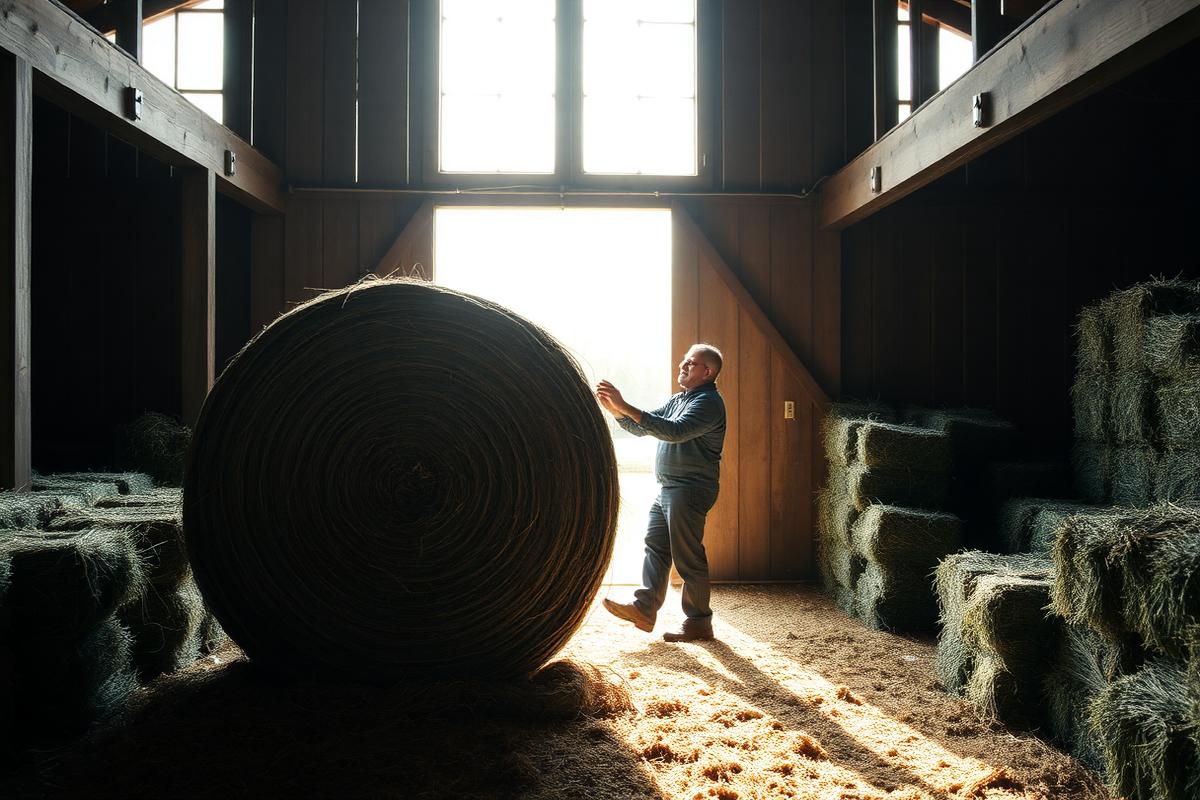
Hay is the only crop most livestock farms both grow and eat, and it is routinely the one they measure least. A tonne of hay cut at the right stage and stored under cover can carry a dry ewe through winter on its own. The same field cut three weeks late and stacked outside becomes an expensive form of bedding. The gap between those outcomes is worth several hundred dollars a hectare, and almost all of it is decided by timing and moisture.
What quality actually means
Forage quality is not greenness, and it is not smell — those are proxies people trust far more than they should. Quality is the balance of three measurable things.
- Crude protein (CP). Ranges from 7% in mature grass hay to 20%+ in early-cut lucerne. Determines whether an animal needs supplementary protein.
- Neutral detergent fibre (NDF). Total cell wall. Predicts intake: as NDF rises above about 55%, animals physically eat less.
- Acid detergent fibre (ADF). The indigestible lignin and cellulose fraction. Predicts energy: as ADF rises above about 35%, digestibility falls sharply.
All three move together with plant maturity, and they move fast. Grass at boot stage might test 16% CP and 52% NDF; the same sward two weeks later, fully headed, tests 9% CP and 65% NDF. That is the difference between a feed that maintains a lactating animal and one that barely maintains a dry one.
Cutting timing beats everything
If you take one thing from this article: cut earlier than feels comfortable. Every day past the correct growth stage costs roughly 0.5 percentage points of digestibility, and yield gained past that point is stem and lignin, not feed.
The targets:
- Cool-season grasses (timothy, orchardgrass, fescue, ryegrass): cut at boot stage, when the seedhead is still enclosed in the flag leaf sheath and just beginning to swell.
- Lucerne / alfalfa: cut at late bud to 10% bloom. Waiting for full bloom costs protein without adding useful tonnage.
- Clover mixes: cut when the grass component reaches boot, since grass matures faster and drags the average down.
- Later cuts: take regrowth on a 30–40 day interval, and leave the final cut of the season at least four to five weeks before the first killing frost so plants rebuild root reserves.
Cut in the morning after dew lifts, not at dawn. Plants accumulate sugars through the day, so a late-morning or early-afternoon cut has measurably higher soluble carbohydrate — but it also needs the remaining daylight to wilt, so on a three-day weather window the morning cut wins on drying and the afternoon cut wins on sugar. Weather decides.
Set the mower to leave 8–10 cm of stubble on grass, and 5–8 cm on lucerne. Cutting closer scalps crowns, slows regrowth, and pulls soil and ash into the windrow, which shows up as high ash content in a forage test and grit in the bale.
Drying, conditioning and tedding
Hay is dried, not cured. Fresh forage leaves the mower at 75–85% moisture and must reach 15–18% before it is safe to bale, which means shedding roughly four kilograms of water for every kilogram of dry matter.
A mower-conditioner does most of the work by crimping or abrading stems so they lose water at a rate closer to the leaves. Without conditioning, leaves dry and shatter while stems stay wet — which is precisely backwards, because leaves hold most of the protein.
Spread the swath wide. A windrow laid out to 70–80% of the cut width dries dramatically faster than a narrow rope, sometimes cutting a full day off the field time. This single adjustment is free.
Ted once, early, while the crop is still above about 40% moisture. Tedding drier hay smashes leaves off the stems, and every leaf lost is protein lost. Rake into windrows when the crop reaches roughly 30–40% moisture, again to preserve leaf, and rake in the same direction the baler will travel.
Rain on cut hay costs 5–15% of dry matter and a similar share of quality, because rain leaches exactly the soluble sugars and proteins you were trying to keep. One rain event on nearly dry hay does more damage than the same rain on freshly cut hay. Watch the forecast, and if the window closes, consider baling wet as wrapped haylage instead of chasing dry hay through a wet week.
Baling moisture and barn fires
Moisture at baling is the difference between feed and a fire. Targets by package:
- Small square bales: 18–20% moisture.
- Large round bales: 15–18% — the denser, larger package sheds heat far more slowly.
- Large square bales: 12–16%, the tightest tolerance of all.
Buy a probe moisture meter. Twisting a handful of stems is a skill, but it is not a measurement, and it consistently reads two to four points low on a warm afternoon.
Hay baled wet heats. Microbial respiration drives temperature up over the first two to six weeks, and above about 65 °C chemical oxidation takes over and becomes self-sustaining. Above 80 °C, spontaneous combustion is a live risk. Probe new stacks daily for the first fortnight: above 55 °C, monitor twice daily and open the stack for airflow; above 70 °C, call the fire service before moving anything, because pulling bales apart introduces oxygen to a smouldering core.
Hay that heats without burning still loses. Heat-damaged protein binds to fibre and becomes unavailable, which a forage test reports as elevated ADF-insoluble crude protein. The bale looks brown, smells sweet like tobacco, and animals often eat it happily — while getting a fraction of the protein the label suggests. Preservatives based on buffered propionic acid allow baling two to four points wetter and are worth their cost in a marginal climate, provided they are applied at the correct rate across the full windrow.
Storage losses that cost real money
Storage is where most of the value quietly disappears, and it is the cheapest problem on this list to fix.
- Inside a barn, off the ground: 2–5% dry matter loss.
- Outside, covered, on gravel or pallets: 5–10%.
- Outside, uncovered, on gravel: 15–20%.
- Outside, uncovered, sitting on soil: 25–35%.
A round bale left on bare ground wicks moisture upward and rots from the bottom. The outer 10 cm of a 1.5 m bale is about 25% of its volume, so a spoiled rind is not a cosmetic problem. On a hundred-bale winter supply at $60 a bale, moving from bare-ground outdoor storage to covered storage saves roughly $1,500 a year — which pays for a lot of gravel and tarpaulin.
If bales must live outside, line them end to end in north-south rows on a well-drained base, with at least a metre between rows so sun and wind reach the sides. Never stack uncovered round bales in a pyramid: it creates flat surfaces that trap water in the worst possible place.
Testing and feeding to the result
A forage analysis costs about the price of two bales and tells you what you actually have. Core-sample 15–20 bales per lot with a proper hay probe, combine into one sample, and send it in. Guessing from appearance leads to overfeeding expensive grain to animals eating good hay, and underfeeding animals eating poor hay.
Then sort the hay by quality and feed it deliberately: the best cut goes to lactating animals and growing stock, the mid-grade to late gestation, the stemmy first-cut rain-damaged lot to dry mature animals with a protein supplement. Feeding a single average pile to every class of livestock wastes the good hay and shortchanges the animals that need it.
Feed waste at the ring matters as much as storage. Bales rolled out on the ground lose 25–40% to trampling and fouling; a well-designed cone or sheeted round-bale feeder cuts that to under 10%.
Make or buy: the honest numbers
Making your own hay looks cheap until you cost the machinery. A mower-conditioner, tedder, rake and baler, even bought used, represent a serious capital line, plus fuel, twine, repairs, and the weather risk of owning a three-day drying window you cannot control.
Below roughly 20 hectares of hay ground, custom hiring or buying tested hay from a specialist almost always wins on cost and quality. Above that, ownership starts to make sense — and even then, hiring the baler alone while owning the mower and rake is often the sharpest compromise, since the baler is the most expensive and least-used machine in the chain.
Whichever route you take, buy on a forage test rather than on appearance, store it under cover, and feed it to the class of stock its analysis suits. Those three habits are worth more than any machine in the shed.
Key takeaways
- ◆Cut at boot stage for grasses and late bud for lucerne - maturity, not yield, decides feed value.
- ◆Spread the swath to 70-80% of cut width and ted only while the crop is above 40% moisture to keep leaves on stems.
- ◆Bale round bales at 15-18% moisture and probe new stacks daily for two weeks to catch heating.
- ◆Store bales under cover and off bare ground; uncovered bales on soil lose a quarter to a third of their dry matter.
- ◆Test forage and match each lot to the class of livestock its analysis actually suits.
Frequently asked questions
What moisture should hay be baled at?+
Small square bales at 18-20%, large round bales at 15-18% and large square bales at 12-16%. Larger, denser packages shed heat more slowly and need drier hay.
When is the best time to cut hay?+
Cut cool-season grasses at boot stage, before the seedhead emerges, and lucerne at late bud to 10% bloom. Every day past that costs roughly half a percentage point of digestibility.
Can hay really catch fire on its own?+
Yes. Hay baled too wet heats through microbial respiration, and above about 65 degrees C chemical oxidation becomes self-sustaining. Probe new stacks daily for the first two weeks and call the fire service above 70 degrees C.
How much hay is lost in outdoor storage?+
Uncovered round bales sitting on soil lose 25-35% of dry matter, versus 2-5% stored inside a barn off the ground. Gravel and a tarpaulin pay for themselves in a single winter.
Keywords
- making quality hay
- hay baling moisture
- when to cut hay
- hay storage losses
- forage quality testing
Related reading
Homesteading
Raising Sheep on Small Acreage: Grazing, Parasites and Lambing
Sheep fit small farms better than any other ruminant, but parasites end more flocks than predators ever will. A working guide to stocking rates, rotational grazing, FAMACHA-based worm control, lambing and the real numbers on 20 ewes.
August 5, 2026 · 14 min read
Homesteading
Starting a Backyard Homestead: The Realistic First Year
A grounded, non-romantic guide to your first year of homesteading — what actually works on a quarter-acre, in what order, and where new homesteaders most often burn out.
July 5, 2026 · 9 min read
Regenerative Farming
Cover Crop Rotation Planning: A Season-by-Season Playbook
Design a cover-crop rotation that actually fits your cash crops, climate and equipment. A working agronomist's playbook with species mixes, seeding rates and termination timing.
June 2, 2026 · 10 min read