Homesteading
Raising Sheep on Small Acreage: Grazing, Parasites and Lambing
Sheep fit small farms better than any other ruminant, but parasites end more flocks than predators ever will. A working guide to stocking rates, rotational grazing, FAMACHA-based worm control, lambing and the real numbers on 20 ewes.

Published August 5, 2026 · 14 min read
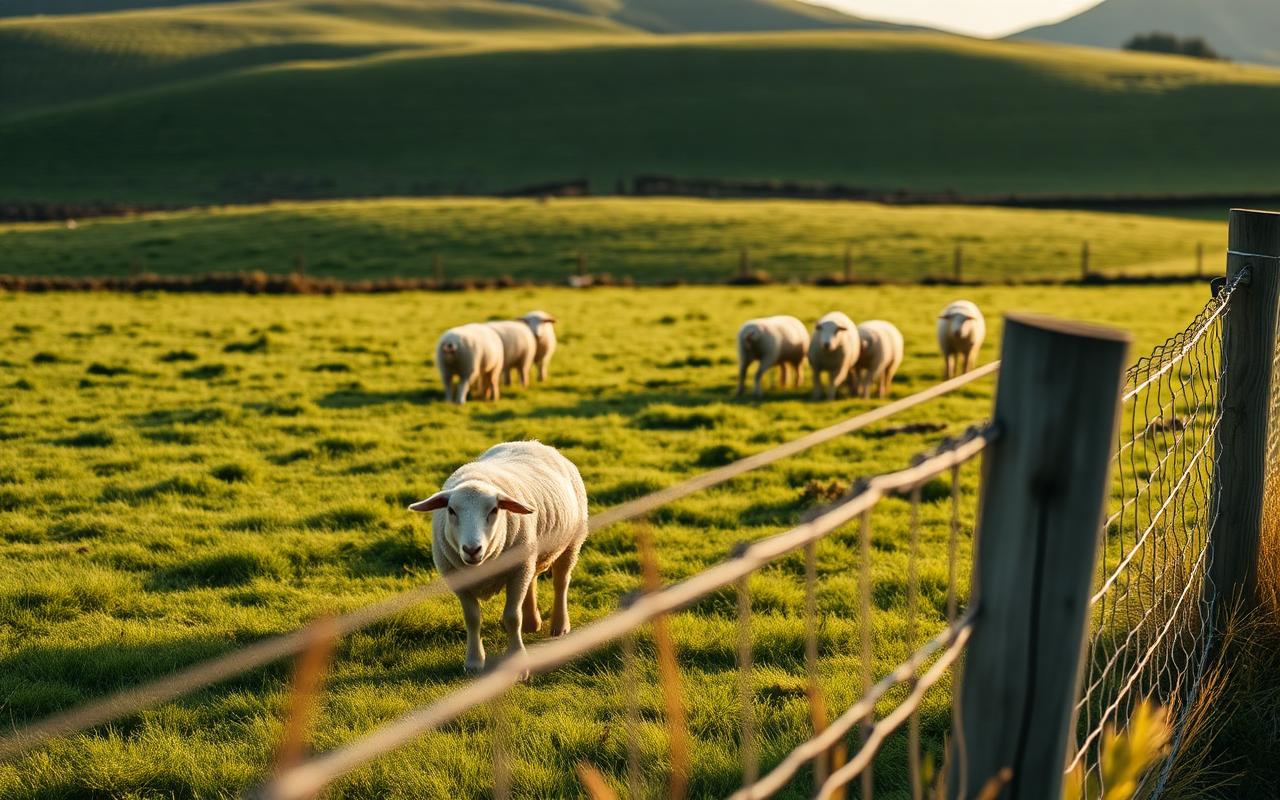
Sheep are the most forgiving livestock a smallholder can start with, and the most commonly mismanaged. They fit small acreage, need no expensive handling infrastructure, convert grass into meat efficiently, and can be worked without a tractor. They also die of parasites faster than any other ruminant on a farm that grazes them the way a beef herd is grazed. Almost everything that follows exists to keep those two facts in balance.
How many sheep fit your land
The honest answer depends on rainfall, soil and grass species, but a working rule for productive temperate pasture is five to eight ewes with lambs per acre under rotational management, or two to three per acre under continuous grazing. That gap is the whole argument for rotation.
A better way to think about it is dry-matter demand. A 150 lb ewe eats roughly 3–4% of her body weight in dry matter daily during lactation — about 5–6 lb. Ten ewes with lambs need around 70 lb of dry matter a day, or 2,100 lb a month. A good pasture growing at 40 lb of dry matter per acre per day in peak season supports that flock on about two acres of active grazing area, with the rest of the farm resting.
Undergrazing is a real problem too. Pastures left ungrazed go stemmy and lose feed value, and thin flocks on large paddocks graze selectively, hollowing out the best species and letting weeds take the rest.
Breeds for the small flock
Choose for climate and purpose before appearance.
- Katahdin — hair sheep, no shearing, strong parasite resistance, excellent maternal traits. The default recommendation for a first flock in a humid climate.
- Dorper — hair sheep with faster finishing and heavier carcasses; less parasite-resistant than Katahdin but excellent in dry regions.
- Romney — dual-purpose wool breed, hardy in wet conditions, good mothers, sound feet.
- Icelandic — small, thrifty, three-purpose (meat, wool, milk), well suited to rough grazing and cold sites.
- Suffolk or Texel terminal rams — bred over a hardy maternal ewe flock to add growth rate and carcass yield to market lambs.
Unless you have a wool market lined up and enjoy shearing, hair sheep remove an annual cost and a labour bottleneck that catches many new shepherds by surprise: shearers are increasingly hard to book for flocks under 50 head.
Rotational grazing that actually works
The mechanics are simple. Divide the grazing area into paddocks, move the flock before they graze the sward below 3–4 inches, and do not return until the grass has recovered to 6–8 inches. In peak growth that rest period might be 21 days; in late summer it may stretch to 45 or more.
Portable electric netting — three or four 164-foot rolls with a solar energiser — turns any field into a paddock system for under $1,200 and is the single best equipment purchase for a small flock. Move the flock every one to three days. Short grazing periods matter more than paddock size, because a paddock grazed for a week lets sheep re-graze the regrowth on grass they hit on day one, which is what exhausts a sward.
Rest periods are also the primary parasite control tool. Infective larvae concentrate in the bottom two inches of the sward and most die off within 30–45 days without a host. Grazing tall, moving often and resting long breaks the cycle before any drench is needed.
Parasite management: the thing that kills flocks
Haemonchus contortus, the barber pole worm, is a blood-feeding stomach parasite that can kill a lamb in a week with almost no diarrhoea to warn you. It is the leading cause of sheep death on small farms in warm, humid regions, and it has developed resistance to most drench families through decades of routine whole-flock treatment.
Modern practice is targeted selective treatment using the FAMACHA scoring system: check the colour of the lower eyelid mucous membrane against a printed card, score 1 (deep red, healthy) to 5 (white, severely anaemic), and drench only animals scoring 4 or 5, plus scores of 3 in vulnerable classes such as lactating ewes and young lambs. Leaving resistant animals untreated preserves a population of susceptible worms — refugia — that keeps your drenches working for years longer.
Supporting practices that matter:
- Never graze below 4 inches; larvae live at the base of the sward.
- Rest paddocks at least 30 days when temperatures allow, longer in cool weather.
- Graze lambs on the freshest regrowth and follow with adult ewes or cattle, which act as parasite dead-ends for sheep worms.
- Cull ewes that need repeated drenching. Parasite resilience is heritable and culling is the cheapest genetics programme available.
- Run a faecal egg count reduction test every couple of years so you know which drench families still work on your farm.
Feeding through the year
Well-managed pasture meets the nutritional needs of a dry ewe entirely, and most of the needs of a lactating one. Supplement where the calendar demands it, not by habit.
Flushing — putting ewes on rising nutrition for two to three weeks before and after ram turnout — raises ovulation rate and lifts lambing percentage measurably. Fresh pasture or a modest grain ration both work.
Late gestation is the critical window: 70% of foetal growth occurs in the final six weeks, and rumen capacity is shrinking as lambs take up space. Ewes carrying twins need increasing energy density here or they risk pregnancy toxaemia, a metabolic collapse that is far easier to prevent than to treat.
Lactation is the highest demand of the entire year — a ewe nursing twins needs roughly twice her maintenance energy. Time lambing to coincide with the spring flush of grass and you can meet most of that from pasture alone.
Provide a sheep-specific loose mineral free-choice at all times. Do not use cattle or goat minerals: copper concentrations safe for those species accumulate in sheep livers and cause fatal toxicity. This is the most common and most avoidable killer of otherwise healthy sheep.
Lambing without drama
Most ewes lamb unassisted and are better off doing so. Your job is preparation and observation, not intervention.
Gestation runs 145–152 days. Set the ram turnout date deliberately so lambing lands on grass and after the worst weather. Two weeks before the due date, move ewes to a clean, sheltered lambing area, crutch the wool around the udder on wool breeds, and assemble the kit: iodine for navels, lubricant, long gloves, a lamb sling or scale, colostrum replacer, and a heat source for chilled lambs.
Watch for a ewe separating from the flock, pawing at bedding and straining. Normal delivery presents two front feet with a nose resting between them, and progresses within 45 minutes of hard straining. Anything else — a head with no feet, one leg back, a tail first, or an hour of unproductive straining — needs help or a vet call.
The first two hours decide the lamb's survival. Confirm it is dry and breathing, dip the navel in iodine, and make sure it nurses colostrum within an hour. A lamb needs about 10% of its body weight in colostrum in the first 24 hours. Jug the ewe and lambs in a small pen for 24–48 hours to cement bonding, then return them to the flock.
What a small flock actually returns
Indicative annual figures for 20 ewes on well-managed pasture:
- Lambs weaned at 165%: 33 lambs
- Sold at 90 lb live at $2.60/lb: $7,720
- Hay, roughly 1.5 tons per ewe-equivalent through winter: –$2,400
- Minerals, vaccines, drench, veterinary: –$600
- Fencing, energiser and equipment depreciation: –$500
- Ram amortisation and replacement ewes: –$700
- Net, before land and labour: roughly $3,500
That is not a living, and no honest guide will tell you otherwise at this scale. It is, however, a genuinely profitable enterprise per acre once you sell direct — freezer lambs sold whole or by the half at retail-equivalent pricing can double the revenue line above without adding a single ewe. Winter hay is the largest single cost on almost every small flock; every extra week of grazing you can create through stockpiled forage or better rotation goes straight to the bottom line.
Starting well
Buy five to ten bred ewes from a local flock managed the way you intend to manage — pasture-based, minimally drenched, no grain crutch. Ask about FAMACHA scores, lambing percentage and culling policy. Quarantine and drench new arrivals before they touch your pasture. Then spend the first year watching: grass recovery, body condition, eyelid colour, and how the flock behaves. Sheep tell you what is wrong long before they look sick, if you are in the paddock often enough to notice.
Key takeaways
- ◆Rotational grazing roughly doubles carrying capacity and is the primary parasite control tool.
- ◆Use FAMACHA targeted selective treatment instead of whole-flock drenching to slow resistance.
- ◆Hair breeds such as Katahdin remove shearing costs and bring strong parasite resistance.
- ◆Time lambing to the spring grass flush so lactation demand is met from pasture.
- ◆Winter hay is the largest cost on most small flocks - extending the grazing season is the fastest profit gain.
Frequently asked questions
How many sheep can I keep on one acre?+
Under rotational grazing on productive temperate pasture, roughly five to eight ewes with lambs per acre. Under continuous grazing, expect two to three. Rainfall and soil quality shift both figures substantially.
What is the biggest killer of sheep on small farms?+
Internal parasites, especially the barber pole worm. Use FAMACHA eyelid scoring to treat only affected animals, never graze below four inches, and rest paddocks at least 30 days.
Do I need a barn for sheep?+
No. Sheep need windbreak and shade far more than a barn. A three-sided shelter and good fencing are sufficient in most temperate climates, with a clean sheltered area reserved for lambing.
Can I use cattle or goat mineral for sheep?+
No. Copper levels safe for cattle and goats accumulate in sheep livers and cause fatal toxicity. Always provide a sheep-specific loose mineral free-choice.
Keywords
- raising sheep on small acreage
- sheep rotational grazing
- famacha parasite control
- sheep stocking rate per acre
- lambing guide small flock
Related reading
Homesteading
Farrowing Hogs on Pasture: A Practical Guide for Smallholders
A comprehensive guide to farrowing hogs on pasture, covering breed selection, hut design, nutrition, and predator protection for small-scale farmers.
July 19, 2026 · 7 min read
Homesteading
Pasture-Raised Poultry: The Economics of a 200-Bird Flock
A transparent enterprise budget for a 200-bird pastured broiler operation — feed, infrastructure, labor, processing, sales and the actual take-home margin per bird.
July 13, 2026 · 12 min read
Homesteading
Starting a Backyard Homestead: The Realistic First Year
A grounded, non-romantic guide to your first year of homesteading — what actually works on a quarter-acre, in what order, and where new homesteaders most often burn out.
July 5, 2026 · 9 min read