Regenerative Farming
Roller-Crimper Termination: Killing a Cover Crop Without Herbicide or Tillage
How to terminate cereal rye and other cover crops with a roller-crimper — timing by growth stage, implement specs, cash-crop planting into the mulch and what it costs per acre.

Published July 16, 2026 · 13 min read
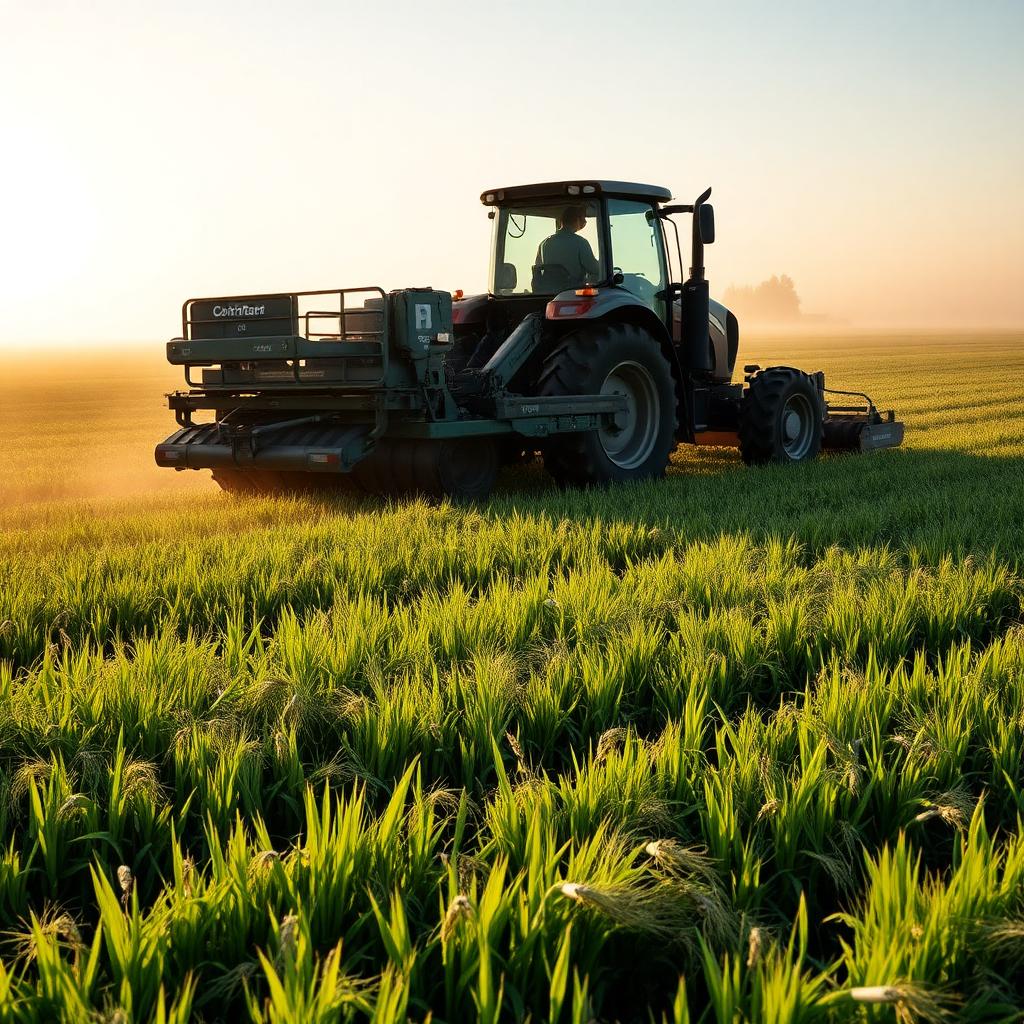
The roller-crimper is the single tool that made no-till organic row cropping practical. It kills a mature cover crop mechanically, in one pass, without herbicide and without disturbing the soil. Done at the right growth stage, it produces a thick weed-suppressing mulch that the cash crop is planted directly into. Done at the wrong stage, it produces a very expensive lawn mower. This guide is about hitting the right stage every year.
Why crimp instead of spray or till
Cover crop termination is the single hardest operation in a soil-health rotation. Tillage kills any cover crop reliably, but destroys the biological gains the cover was grown for. Herbicide is fast and precise, but is closed to organic operations and increasingly resisted by conventional buyers seeking regenerative-labeled grain. The roller-crimper is the third path: mechanical, tillage-free, chemical-free, and — critically — it leaves the cover crop residue in place as a mulch mat on the soil surface.
That mulch is doing three jobs at once: suppressing weeds through physical and allelopathic exclusion, moderating soil temperature and moisture through the early cash-crop season, and feeding soil biology as it decomposes. No other termination method delivers all three.
How a roller-crimper actually kills
A roller-crimper is a heavy horizontal drum, typically 10–20 feet wide, with chevron-pattern blunt steel blades welded to the surface. Pulled behind a tractor, the drum rolls flat over the standing cover crop and the blades crimp — not cut — the stems at 6- to 8-inch intervals. Each crimp crushes the vascular tissue at that point, interrupting water and nutrient movement. If the plant is at the correct reproductive stage, it cannot recover: it desiccates over the following 10–14 days into a dry, flat mulch mat aligned in the direction of travel.
The blunt-blade geometry matters. A sharp mower or flail cuts stems cleanly, which invites regrowth from crown tissue. A crimper crushes without severing, which prevents the plant from re-mobilizing carbohydrate reserves. This is why a flail mower cannot substitute for a crimper on species like cereal rye — the rye simply grows back.
The one thing that decides success: timing
Crimping fails or succeeds on one variable: cover crop growth stage. Cereal rye — the workhorse of the system — must be at anthesis (Feekes 10.5.1, full flower, anthers visible along the head) or later. Crimped earlier, it recovers. Crimped later, kill is even more reliable but you have delayed cash-crop planting.
Practical field indicators that rye is ready:
- Heads are fully emerged and yellow anthers are hanging along at least the middle third of the head.
- Pollen shakes loose when you brush a hand across the canopy.
- Stems no longer bend back up after being pressed flat with a boot.
That last test is decisive. If a boot-pressed stem springs back within 30 seconds, the field is not ready — wait 3–5 days. Depending on region and variety, anthesis in cereal rye falls somewhere between late April and early June. Scout the field weekly starting two weeks before your expected planting window.
Which cover crops crimp cleanly
Not every cover crop terminates well with a crimper. The reliable performers:
- Cereal rye — the gold standard. Terminates cleanly at anthesis, produces 4,000–8,000 lb/acre of dry biomass, mulch persists for 90+ days.
- Winter wheat, triticale, barley — terminate at anthesis like rye, but produce less biomass and a shorter-lived mulch.
- Hairy vetch — terminates at full flower, produces excellent nitrogen contribution but a thinner mulch. Best mixed with rye.
- Winter peas, crimson clover — terminate at full flower, but only when grown mixed with a small grain that provides the standing biomass for the drum to press against.
Species that do not crimp reliably: annual ryegrass (regrows aggressively), oats terminated before heading, and any brassica (radish, turnip) — brassicas typically winterkill or must be tilled.
Specifying the implement
Two families of crimpers dominate: front-mounted (pulled ahead of the tractor, often paired with a rear planter for one-pass "plant-green" operation) and rear-mounted (drawn behind, kill first and plant later). For 40–400 acre operations, a rear-mounted 10–15 ft drum with water ballast is the practical entry point.
Working specs for a 10-ft drum:
- Drum diameter: 16 inches minimum for adequate ground pressure.
- Blade pattern: chevron or curved-vee spacing 6–8 inches between crimps.
- Weight when filled: roughly 1,500–2,000 lb (water ballast, drained before transport).
- Tractor requirement: 45–60 hp is sufficient at 4–6 mph.
Purchase price for a new 10-ft rear-mounted unit runs $6,000–$9,000; well-maintained used units can be found for $3,500–$5,500. Rodale Institute and several land-grant universities publish DIY plans, and shop-built crimpers from 8-inch schedule-40 pipe with welded blades are common on operations under 100 acres.
Planting the cash crop into the mulch
Two workflows dominate. In plant-green, a no-till planter runs immediately behind the crimper on the same pass, dropping seed into the standing-but-crimped cover. In plant-after, the field is crimped and then planted 7–14 days later once the residue has settled.
Plant-green is faster and better for moisture retention, but demands a planter set up for high residue: heavy down-pressure (250–450 lb per row), sharp row cleaners set to just skim the surface, and closing wheels that firm the seed slot through the mulch. Plant-after is more forgiving of a standard no-till setup and works well for late-planted crops like soybeans and grain sorghum. Both methods succeed with corn or soybeans planted into properly terminated cereal rye; corn is the harder crop because it needs faster early-season warming than the mulch provides.
What the mulch does for weeds
A properly terminated cereal-rye mat of 4,000+ lb/acre suppresses summer annual weeds by 60–90% for the first 8–10 weeks after planting — the critical weed-competitive window for most cash crops. The suppression is mechanical (a physical barrier to germination and emergence) and allelopathic (rye releases benzoxazinoid compounds that inhibit small-seeded weed germination).
Weeds that still emerge — typically large-seeded pigweeds and morning glory — need a rescue strategy. In organic systems, a single high-residue cultivation at cash-crop V4–V6 stage handles most escapes. In conventional systems, a reduced herbicide program (typically 40–60% of the normal rate) closes the gap.
What it costs and what it saves
Per-acre economics on a 200-acre corn-and-soybean rotation using a $7,000 crimper amortized over 10 years:
- Crimping operation: $8–$12 per acre (fuel, labor, implement depreciation).
- Cover crop seed (cereal rye at 60–80 lb/acre): $18–$28 per acre.
- Herbicide displaced (burndown + one residual): $22–$35 per acre saved.
- Tillage displaced (one field cultivation pass): $14–$20 per acre saved.
Net operational cost is roughly break-even in year one. The compounding gains come from soil-health improvements: on paired-field trials at Rodale and Michigan State, roller-crimped no-till systems produced yields within 92–105% of conventional after year three, while cutting fuel use by 60% and increasing soil organic matter by 0.3–0.5% over five years.
The roller-crimper is not magic. It rewards a farmer who scouts weekly, plants at the right window and buys — or builds — an implement heavy enough to do the job. The reward is a cash crop planted into a living, biologically active soil under a mulch it built for itself.
Key takeaways
- ◆Roller-crimpers kill cover crops mechanically, without herbicide or tillage, at the right growth stage.
- ◆Cereal rye must be at anthesis — full flower with visible anthers — for reliable termination.
- ◆A 4,000+ lb/acre rye mulch suppresses summer annual weeds by 60–90% for 8–10 weeks after planting.
- ◆Entry cost is $3,500–$9,000 for the implement; per-acre operating cost is $8–$12 plus cover crop seed.
- ◆Plant-green (crimp and plant same pass) is fastest; plant-after (7–14 day delay) is more forgiving of planter setup.
Frequently asked questions
Can I use a cultipacker or land roller instead of a crimper?+
No. A cultipacker presses stems flat but does not crimp the vascular tissue, so most stems recover within a week. The chevron blade pattern that crushes stems at 6–8 inch intervals is what makes the crimper work — without it, you are just rolling grass.
What if I have to crimp before the rye reaches anthesis?+
You will get partial kill and regrowth. Options: wait 3–5 days if the calendar allows, crimp twice with a 7-day gap between passes (about 70–85% effective), or accept the regrowth and mow the survivors between crop rows once. Do not plant into a partially killed stand — the recovering rye will out-compete the cash crop for moisture.
Does the mulch delay cash-crop planting or slow emergence?+
The mulch cools the soil by 3–6°F in the top 2 inches for the first 2–3 weeks — a real issue for corn, less so for soybeans. Delay corn planting by 5–7 days versus bare ground, or use a row cleaner to sweep a narrow strip of mulch off the seed row. Soybeans typically plant on the normal date.
How many acres before a crimper is worth buying versus custom-hiring?+
Below about 60 acres per year of cover crop to terminate, custom-hiring at $18–$25 per acre is usually cheaper than owning. Above 100 acres per year, a used shop-built or entry-level new drum pays back within 3–4 seasons. In the 60–100 acre range, splitting a machine with a neighbor is common.
Keywords
- roller crimper cover crop
- cover crop termination
- cereal rye roller crimper
- no-till organic
- planting green
Related reading
Regenerative Farming
No-Till Transition: What Actually Happens in Years One Through Five
An honest, year-by-year account of what to expect when a conventional farm converts to no-till — yield dips, weed shifts, equipment costs and the point where the system finally pays.
July 14, 2026 · 13 min read

Regenerative Farming
Cover Crop Rotation Planning: A Season-by-Season Playbook
Design a cover-crop rotation that actually fits your cash crops, climate and equipment. A working agronomist's playbook with species mixes, seeding rates and termination timing.
June 2, 2026 · 10 min read

Soil Health
Building Healthy Soil: A Practical, Working-Farm Guide
How real farms build living, productive soil — a field-tested guide to soil biology, organic matter, cover crops and testing you can actually use this season.
May 14, 2026 · 12 min read